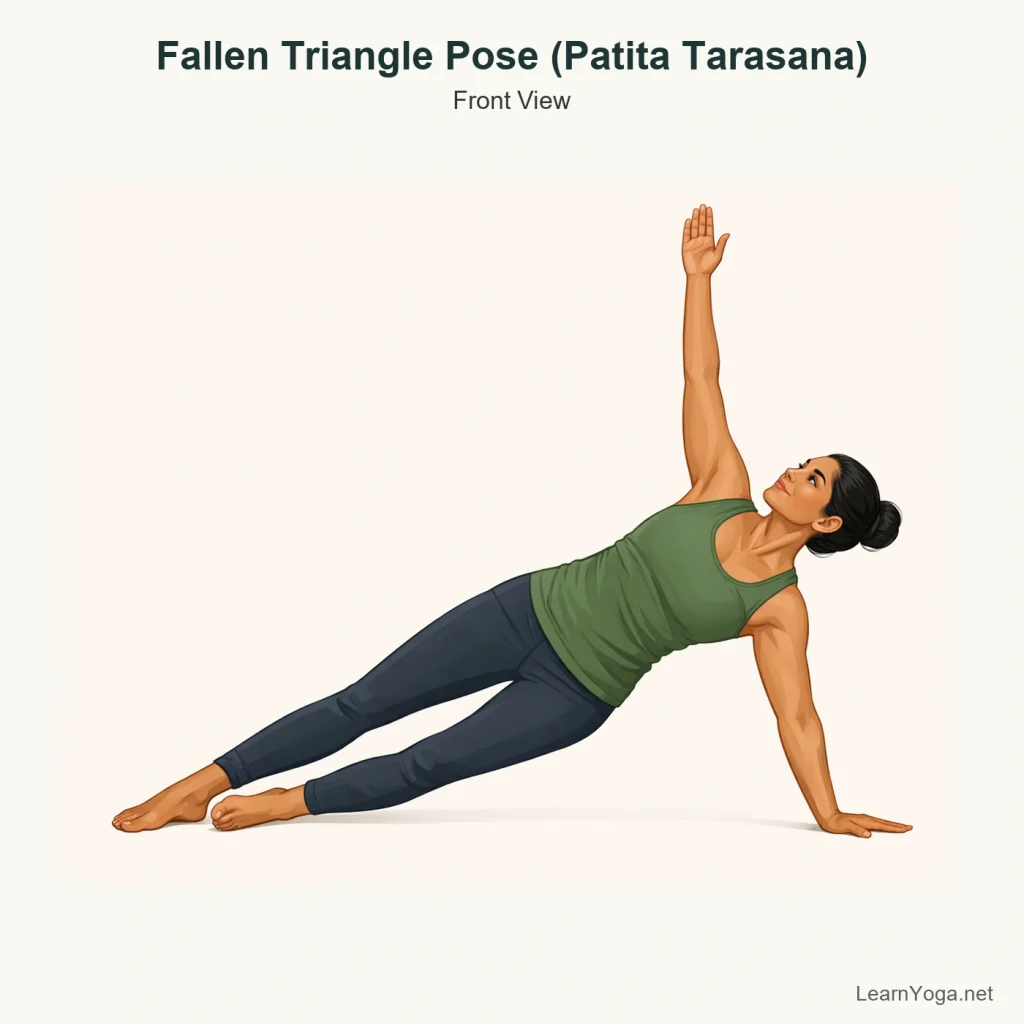
Fallen Triangle is a twisting balance with one hand on the floor, one foot grounded and the other leg extended underneath the body. It builds coordination between the shoulders, core and hips, and it usually feels steadier when you focus on the long line from the grounded hand through the lifted side of the chest rather than trying to drop into the shape quickly.
This pose combines a twist, a side-opening shape and a fair amount of support through one wrist and shoulder. The balance is not only about strength. It also depends on where you place the grounded hand, how clearly you press the standing foot, and whether the extended leg has enough room to slide through. Comfortable range differs from body to body, so it is fine if your lifted arm stays on your hip or your chest opens only partway.
How to do Fallen Triangle Pose
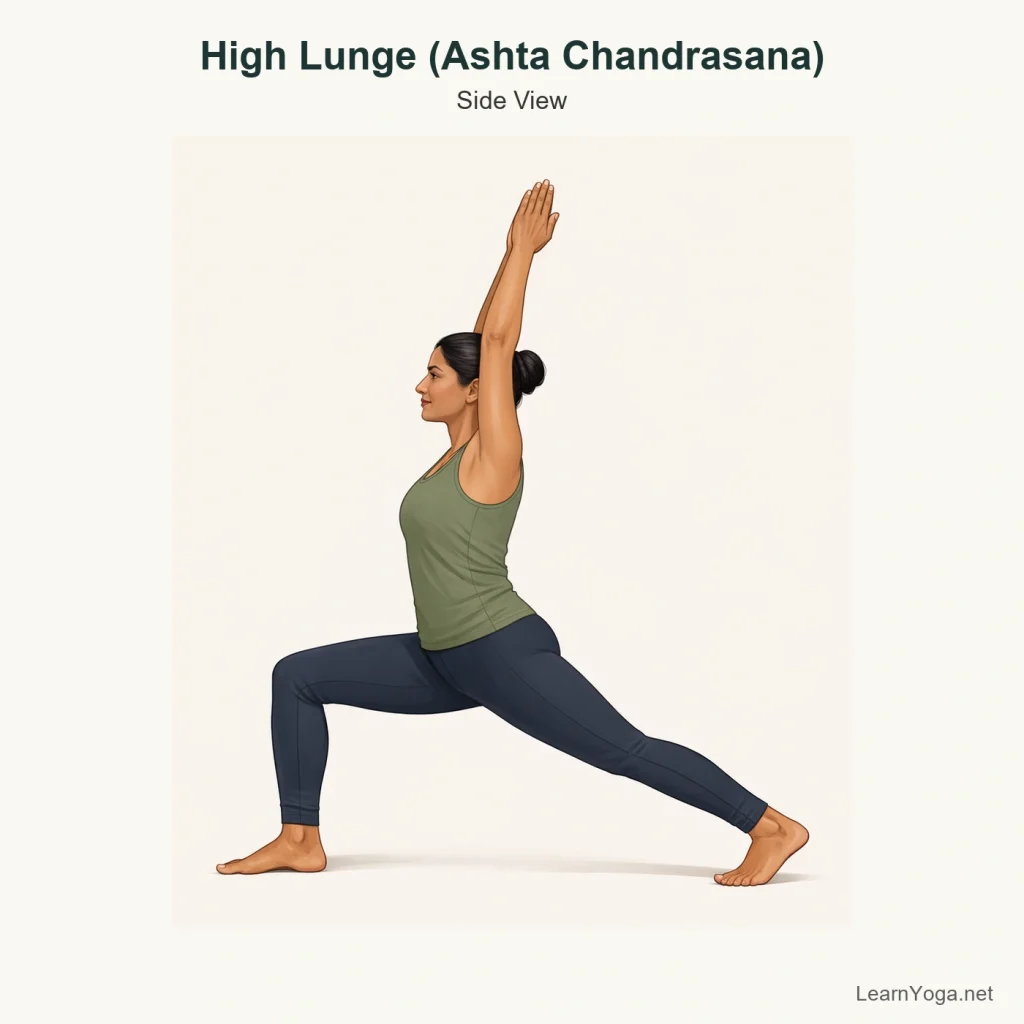
Begin from Downward-Facing Dog or a high lunge setup with your right foot stepping forward outside the right hand.
Shift more weight into your left hand and left foot, and turn slightly onto the outer edge of the left foot.
Slide your right leg underneath you toward the left side, extending the right heel out as the toes turn to face roughly forward or slightly up.
Keep the left hand planted a little in front of the shoulder rather than directly under the chest so the torso has room to rotate.
Press firmly through the left palm and left foot, then begin to turn your chest to the right.
Place your right hand on your hip first, or reach the right arm up if that feels steady in your shoulder and balance.
Lengthen through both legs as much as is comfortable, but keep a soft bend if locking the knees makes the pose feel strained or wobbly.
Take 2 to 5 slow breaths here. On each inhale, create space through the side waist and chest. On each exhale, root the base hand and foot and lightly engage the lower belly.
To come out, lower the top hand, bend the extended leg, and step back carefully to Downward-Facing Dog or a lunge before changing sides.
Yogita's tip
If the pose feels cramped, move the supporting hand a few inches farther forward than you first think. That small change often gives the chest somewhere to turn and makes the underneath leg slide through more cleanly.
Benefits
Builds coordination between the supporting shoulder, wrist and side body.
Strengthens the core and legs while you organise the balance.
Encourages thoracic rotation and side-body opening.
Practises shifting weight onto one hand and one foot with control.
Can prepare the body for other twisting balances and side-plank style transitions.
Common mistakes
Placing the supporting hand too close to the foot, which blocks the twist and makes the pose feel crowded.
Letting the grounded shoulder collapse toward the ear instead of pressing the floor away.
Trying to force both legs fully straight even when that pulls the pelvis out of position.
Dropping the head and chest down, which usually makes the balance heavier.
Swinging into the pose too quickly instead of setting the hand, foot and extended leg first.
Make it work for you
Top hand on hip
Keep the upper hand resting on the hip instead of reaching it to the ceiling. This reduces the demand on balance and makes it easier to organise the twist.
Bent underneath leg
Slide the leg through only partway and keep that knee softly bent. This can give more space if straightening the leg pulls on the hamstrings or shifts you off balance.
Lower from a lunge
Start in a wide lunge with the back knee hovering or lightly lowered first, then explore the twist of the chest without fully extending the underneath leg. Use this if the full transition from Downward-Facing Dog feels rushed.
Alternatives
Kneeling Side Plank
Set one knee down and practise opening the chest with one hand grounded and the top arm lifting.
Use this if full weight-bearing on one wrist and one foot feels too demanding.
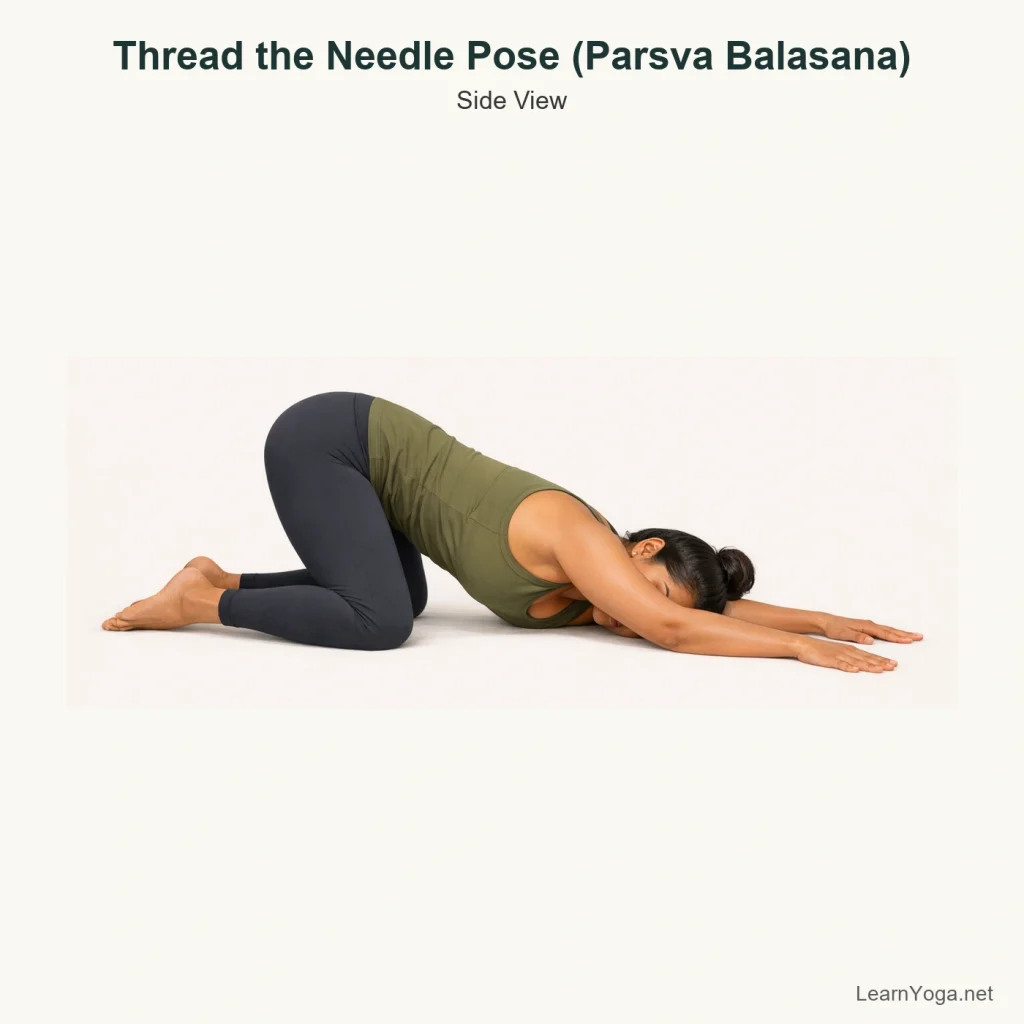
Thread the Needle Pose
From hands and knees, slide one arm under the body and rotate the chest gently without balancing on one hand.
Use this if you want a milder twisting shape with much less load on the wrist and shoulder.
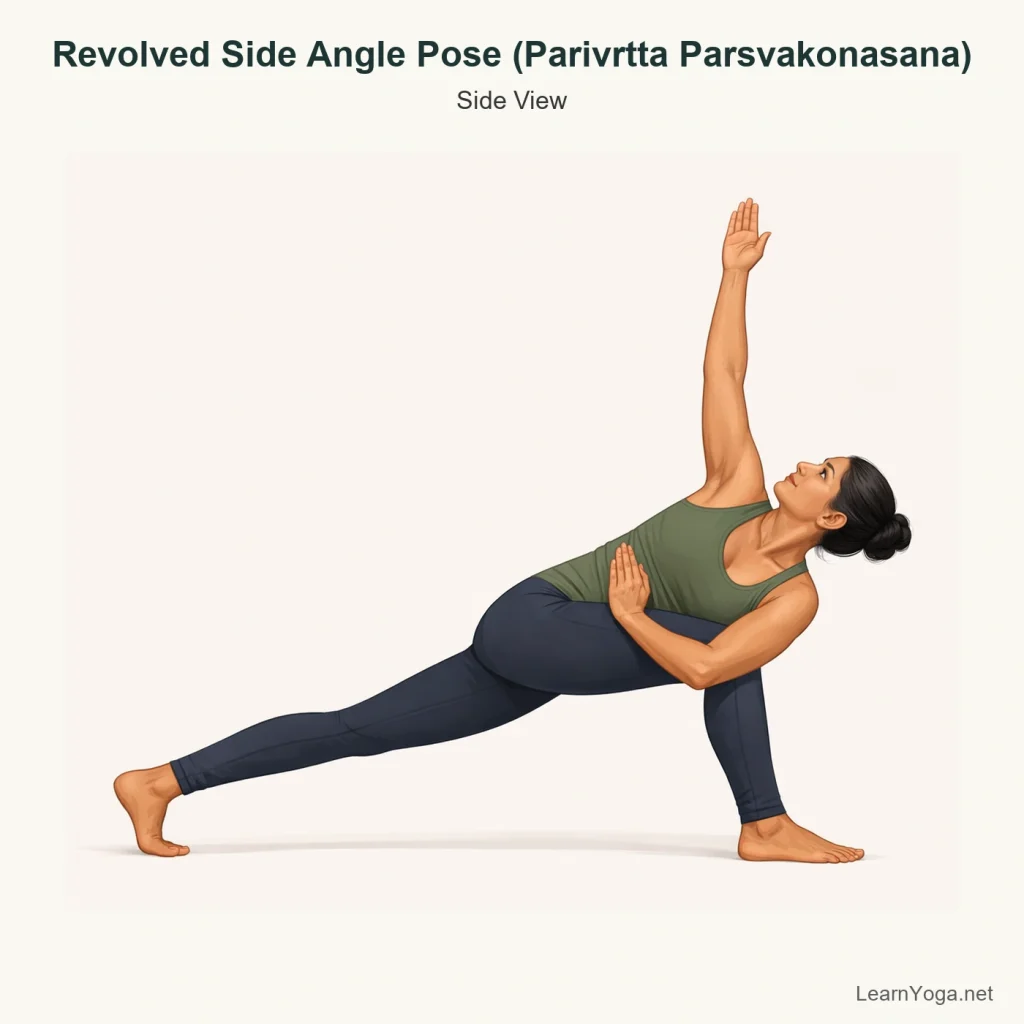
Extended Side Angle Pose
Take the forearm to the thigh or the lower hand to the floor and rotate the chest open from a stable standing base.
Use this if getting low to the floor or threading the leg underneath is not practical today.
Common variations
Fallen Triangle with top arm lifted
The classic version with the chest turning open and the top arm reaching upward.
Fallen Triangle with hand on hip
A steadier variation that keeps the upper arm closer to the body and often helps the ribs rotate without losing balance.
Bent-knee Fallen Triangle
The underneath leg stays slightly bent, which can make the entry smoother and reduce the pull through the back of the leg.
Safety and contraindications
When to avoid or get individual guidance
Avoid or modify if you have a current wrist, shoulder or hamstring strain that is aggravated by weight-bearing or twisting.
Skip the full pose if stepping the leg underneath causes sharp pain in the low back or sacroiliac area.
This pose puts meaningful load through one wrist and shoulder while also asking for a twisting balance.
If your supporting wrist feels compressed, shorten the hold, spread the fingers and press through the base of the index finger and thumb.
Keep a slight bend in either knee if straightening the legs makes the hamstrings or low back feel pulled.
Choose Kneeling Side Plank or Extended Side Angle Pose if the balance feels too unstable to control.
Come out of Fallen Triangle if you get sharp pain in the supporting wrist, shoulder, low back or hamstring, or the arm cannot support you steadily even with an easier variation. Get individual guidance before trying the full pose again.
Accessibility and limited mobility
This pose can be awkward if getting down to the floor or back up again is difficult. A standing twist such as Extended Side Angle Pose may be more practical.
If wrist extension is limited, try a kneeling side variation instead of pushing into the full shape.
Older adults or anyone with reduced balance may prefer to keep the top hand on the hip and hold for only 1 or 2 breaths.
Easier options
Use these related poses when you want a more accessible way to practise a similar movement or prepare for this pose.
Usually a little farther forward than seems obvious. If the hand is too close to the foot, the chest has nowhere to turn and the pose feels jammed. A slightly forward hand placement often makes the twist and balance much clearer.
Does the underneath leg need to be completely straight?
No. A soft bend is completely fine. Straightening the leg can make the shape look cleaner, but it is not useful if it pulls you out of the twist or creates strain through the hamstring or low back.
Why do I keep collapsing into my bottom shoulder?
This usually happens when the floor is not being pressed away strongly enough. Spread the fingers, root through the palm, and let the shoulder blade feel broad on the back. You can also keep the top hand on the hip while you build that support.
Can I practise Fallen Triangle without coming from Downward-Facing Dog?
Yes. Many people find it easier to set up from a wide lunge because there is more time to place the hand and slide the leg through carefully. The transition matters less than being able to enter with control.
What should I look at in the pose?
Start by looking down or slightly forward if balance is uncertain. If the neck feels easy and the chest is open, you can turn the gaze sideways or upward. There is no need to force the head back just to match the arm.
Reviewed for yoga instruction
Yogita
Certified Yoga Instructor with 5+ years of Teaching and Consistent Practice