Four-Limbed Staff Pose is a strong low hover from Plank that asks the arms, shoulders, chest and core to work together. It is less about getting very low and more about keeping one long line as you lower with control.
This pose often appears in flowing practice, but it is easier to learn when you slow it down. The main job is to keep the chest broad and the belly active while the elbows bend straight back. Many people do better with a smaller range or with the knees down first. That is not a lesser version. It is often the clearest way to build the action safely.
How to do Four-Limbed Staff Pose
Begin in Plank Pose with your shoulders over your wrists and your legs reaching strongly back.
Press the floor away so the upper back feels broad, and draw the front ribs and lower belly in gently.
Shift a little forward onto the balls of your feet so your shoulders move slightly past your wrists.
On an exhale, bend your elbows straight back alongside your ribs rather than letting them wing out.
Lower only as far as you can keep the body in one long line from head to heels. For many people, that means stopping a little higher than elbow level at first.
Keep the neck in line with the spine and look slightly ahead of the hands, not straight down or forward sharply.
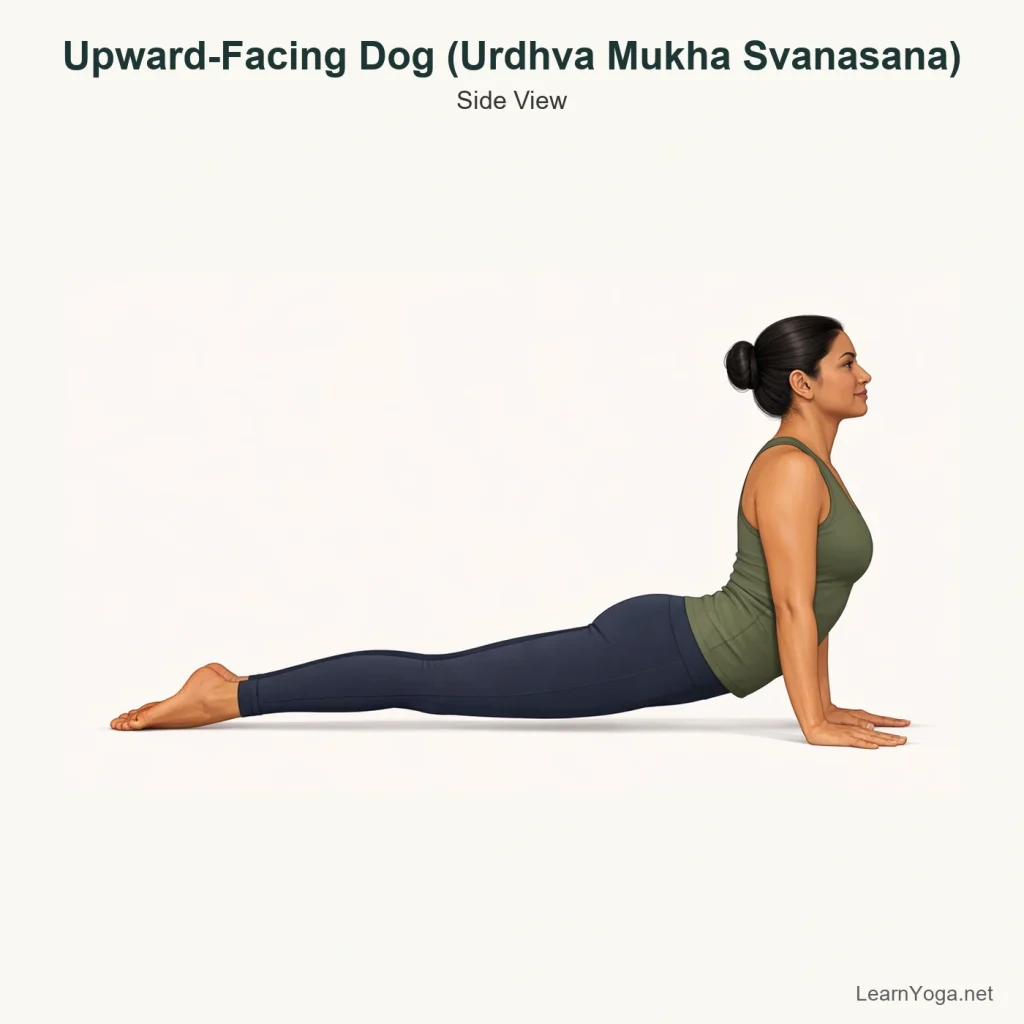
Stay for 1 breath or simply pass through, then lower to the floor for Baby Cobra or Cobra, or roll over the toes into Upward-Facing Dog if that transition is already steady for you.
Yogita's tip
If the pose collapses as soon as you bend the elbows, try thinking of your breastbone reaching forward at the same time as your heels press back. That opposite pull usually makes the hover feel lighter and more organised.
Benefits
Builds pushing strength in the arms, chest and shoulders.
Trains the core to support the spine during a loaded transition.
Helps you coordinate a controlled lowering instead of dropping quickly from Plank.
Improves body awareness in arm-supported poses and vinyasa transitions.
Common mistakes
Dropping the belly and lower back before the arms have enough support.
Letting the shoulders dip lower than the elbows.
Bending the elbows out to the sides instead of straight back.
Trying to lower too far too soon and losing the long line of the body.
Holding the breath through the lowering.
Make it work for you
Knees-Down Chaturanga
From Plank, lower your knees to the mat but keep a straight line from knees through hips to shoulders. Shift slightly forward, then bend the elbows back and lower halfway with control.
Halfway Lower
Only bend the elbows a small amount, then press back up to Plank. This keeps the shape cleaner while you build strength.
Block at Chest Height
Place a yoga block under the breastbone at a height that meets you before the shoulders dip too low. Lower until you lightly touch the block, then continue to the floor or press back.
Alternatives
Plank Pose
Stay in Plank and work on pressing the floor away, keeping the ribs supported and the legs active.
Use this if lowering halfway strains your wrists, shoulders or lower back.
Knees-Chest-Chin Pose
Lower the knees first, then bring chest and chin down with hips slightly lifted as a gentler floor transition.
Use this if you want a traditional lowered transition with less full-body load than Chaturanga.
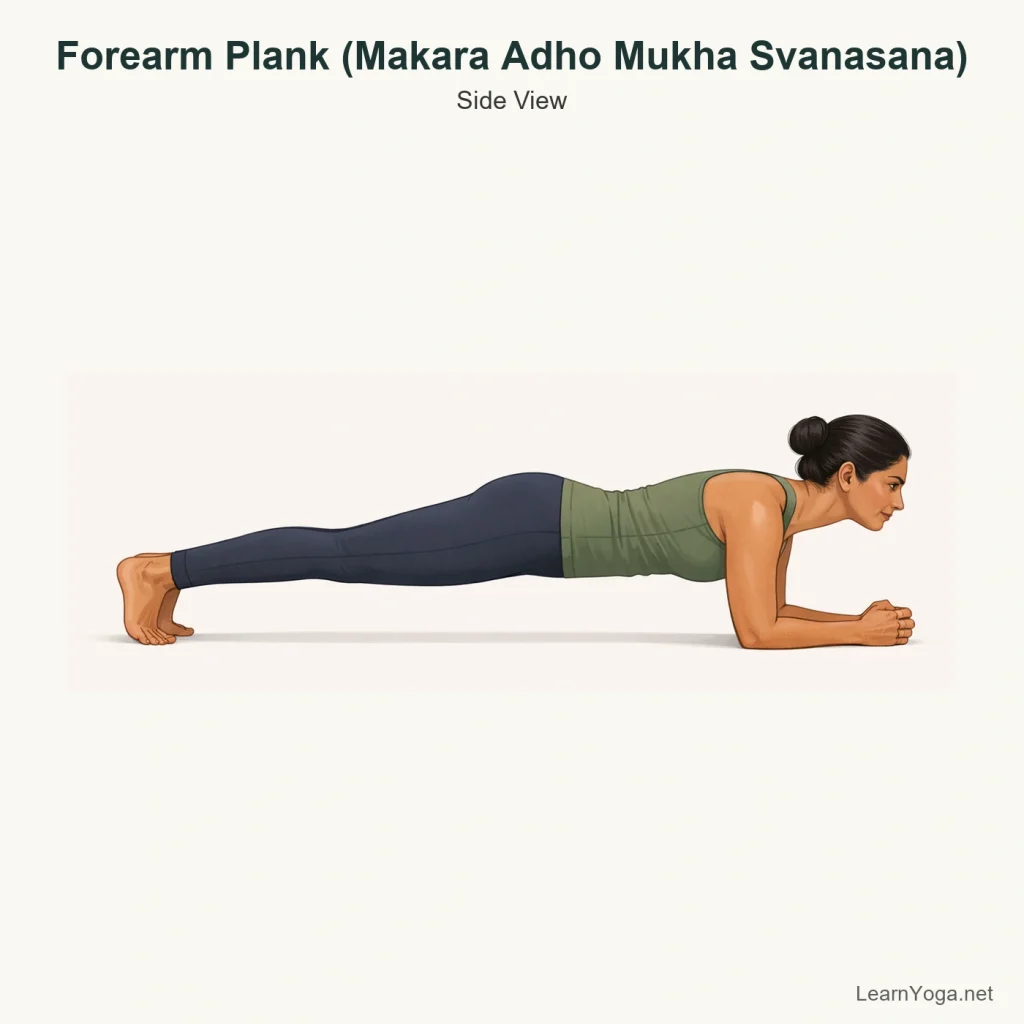
Forearm Plank
Come onto your forearms and keep the body long from head to heels or knees.
Use this if weight-bearing through a bent wrist is the main issue.
Common variations
Knees-Down Variation
A supported version with the knees on the floor, useful for learning the elbow path and core support.
One-Breath Transition
Entered briefly during a vinyasa, with no pause at the bottom before moving to the next pose.
Low Hover Hold
Held for 1 to 3 breaths to build strength and control, usually only when the shoulders stay broad and steady.
Safety and contraindications
When to avoid or get individual guidance
Recent or irritated wrist, shoulder or elbow pain may make this pose unsuitable today.
Skip the full version if you cannot lower without the lower back sagging or the shoulders dipping below elbow height.
Keep the load shared between hands, shoulders, core and legs rather than dropping into the front of the shoulders.
If your wrists feel compressed, shorten the hold or choose Forearm Plank or knees-down lowering.
Stop if you feel sharp pain in the wrists or shoulders.
Pause Chaturanga and switch to knees-down lowering or Forearm Plank when wrist or shoulder pain is sharp or keeps returning, or when bearing weight through the arms does not feel comfortable. Get individual guidance before continuing with the full version.
Accessibility and limited mobility
This pose can be demanding for anyone with limited upper-body strength. A knees-down version is often the most workable starting point.
If getting to the floor is difficult, practise the same elbow-back action at a wall or kitchen counter instead of using the full floor version.
For older adults or anyone with reduced wrist extension, Forearm Plank may be more comfortable than repeated Chaturanga practice.
Easier options
Use these related poses when you want a more accessible way to practise a similar movement or prepare for this pose.
Do I need to come all the way down until my shoulders match my elbows?
No. That depth is only useful if you can keep the chest broad, elbows close and belly supported. Many people learn the pose better by stopping a little higher and keeping the whole body organised.
Why do my elbows keep sliding out to the sides?
This often happens when the chest drops first and the shoulders lose support. Try shifting slightly forward before you bend the elbows, and think of brushing the upper arms back along the ribs.
Is knees-down Chaturanga still the pose?
Yes. It changes the load, but it teaches the same main actions: elbows moving back, chest reaching forward and core supporting the spine. For many bodies, it is the most useful place to practise.
What should I do if my wrists feel it more than anything else?
First check that you are pressing through the whole hand and not hanging into the heel of the palm. If the wrists still complain, shorten the hold, lower the knees, or swap in Forearm Plank for some repetitions.
Should this be a slow hold or just a quick transition?
Either can work. If you are learning, a slow single lowering or a brief 1-breath hold usually gives better feedback. In a flow, it may be just a passing shape, but it should still feel controlled rather than rushed.
Reviewed for yoga instruction
Yogita
Certified Yoga Instructor with 5+ years of Teaching and Consistent Practice