Dragonfly Pose
Dragonfly Pose is a seated wide-leg variation that combines a side bend and forward angle. It asks for hamstring length, side-body space, and enough support under the pelvis to keep the spine from collapsing.
Pose Explorer
Search all published poses or narrow the library by level, goal, body area, pose type, position or energy.

Dragonfly Pose is a seated wide-leg variation that combines a side bend and forward angle. It asks for hamstring length, side-body space, and enough support under the pelvis to keep the spine from collapsing.

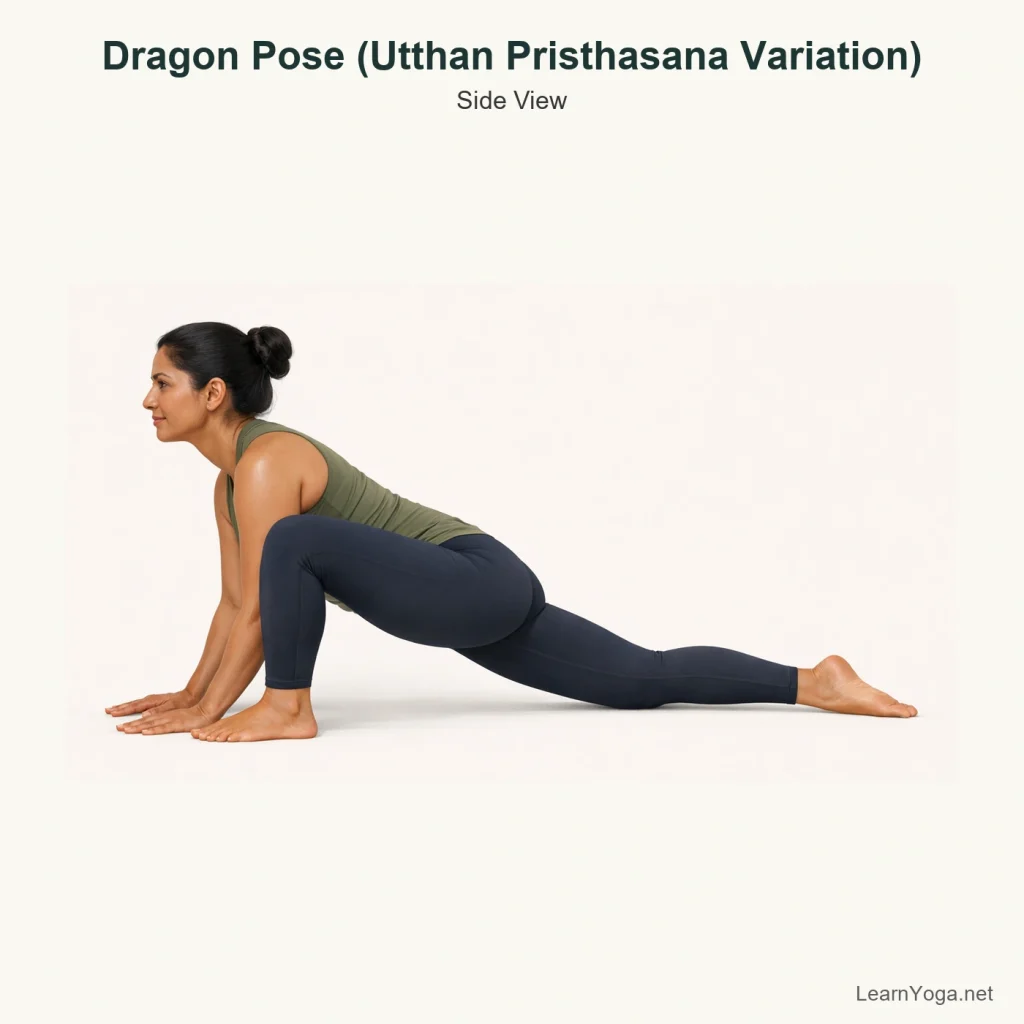
Dragon Pose is a low lunge variation that brings a stronger stretch into the front of the back hip while asking the front hip and inner thigh to open. It can be a useful preparation for deeper lunges and hip-opening work, but it does not need to be pushed far to be effective.

Downward-Facing Dog is a whole-body pose that asks the hands to press, the hips to lift and the spine to lengthen. It does not need straight legs or heels on the floor to be useful.

Dolphin Pose is a forearm version of an inverted V shape. It builds shoulder and upper-back strength, asks the core to stay organised, and can prepare the body for stronger overhead work without as much wrist extension as Downward-Facing Dog.

Deer Pose is a seated hip-opening shape with one shin in front and one leg folded behind. It gives you a clear way to explore rotation through the hips while staying fairly upright, and it can also become a gentle twist if that suits your body.

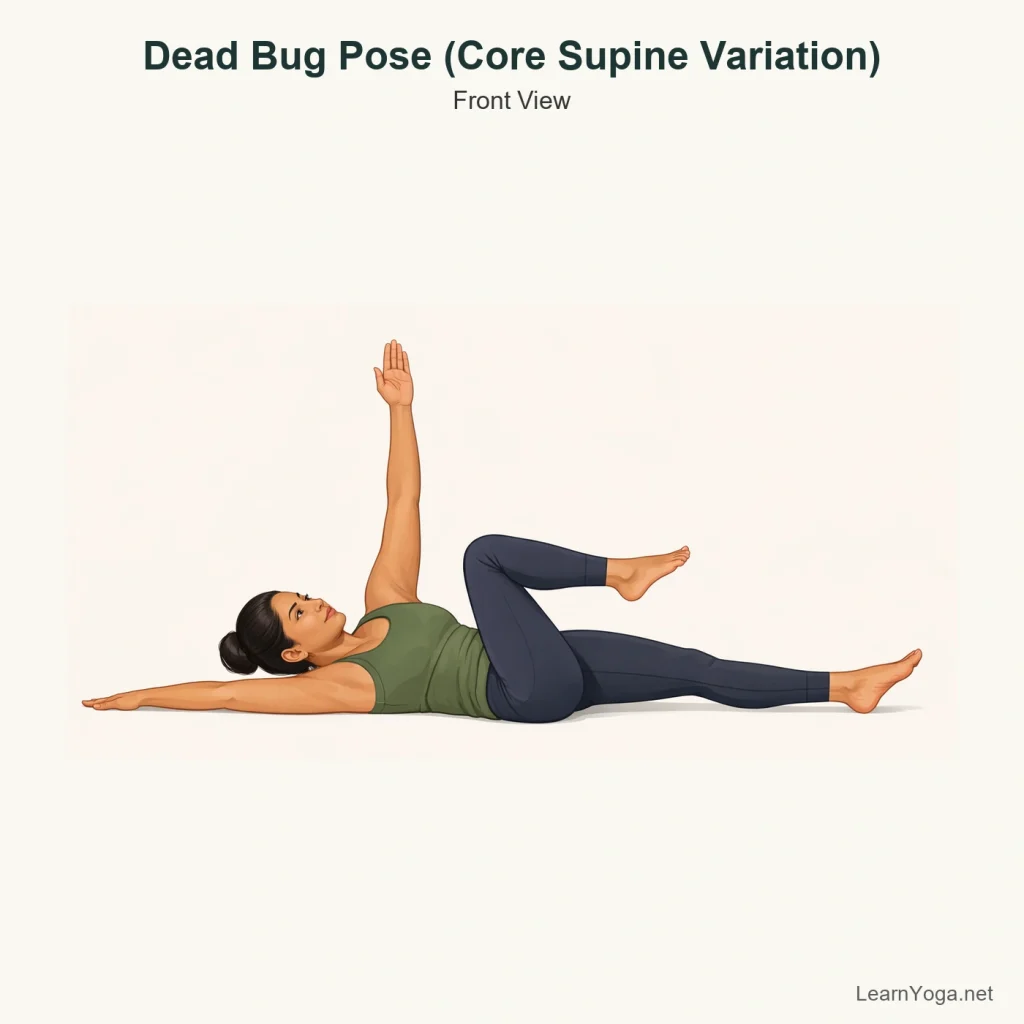
Dead Bug Pose is a simple supine core exercise that teaches you to move the arms and legs while keeping the trunk steady. It is useful for building coordination and noticing how to support the lower back without gripping the neck or shoulders.

Dancer Pose is a standing balance with one foot held behind you as the chest lifts and the free arm reaches forward or up. It asks for steadiness in the standing ankle and leg, space through the front of the hip and thigh of the lifted leg, and enough control that the backbend does not spill into the lower back.

Crow Pose is a compact arm balance that asks for a rounded upper back, steady hand pressure and a clear forward shift. It is less about jumping up and more about placing your weight carefully over your hands.

Crocodile Pose is a simple prone resting shape that lets the front body settle onto the floor while the back body softens. It is often used between stronger backbends or at the end of a practice when you want a quiet, supported pause.

Crane Pose is a compact arm balance that asks for rounded upper back strength, deep hip flexion and a clear forward shift over the hands. It is less about jumping and more about placing the body carefully so the feet can become light.