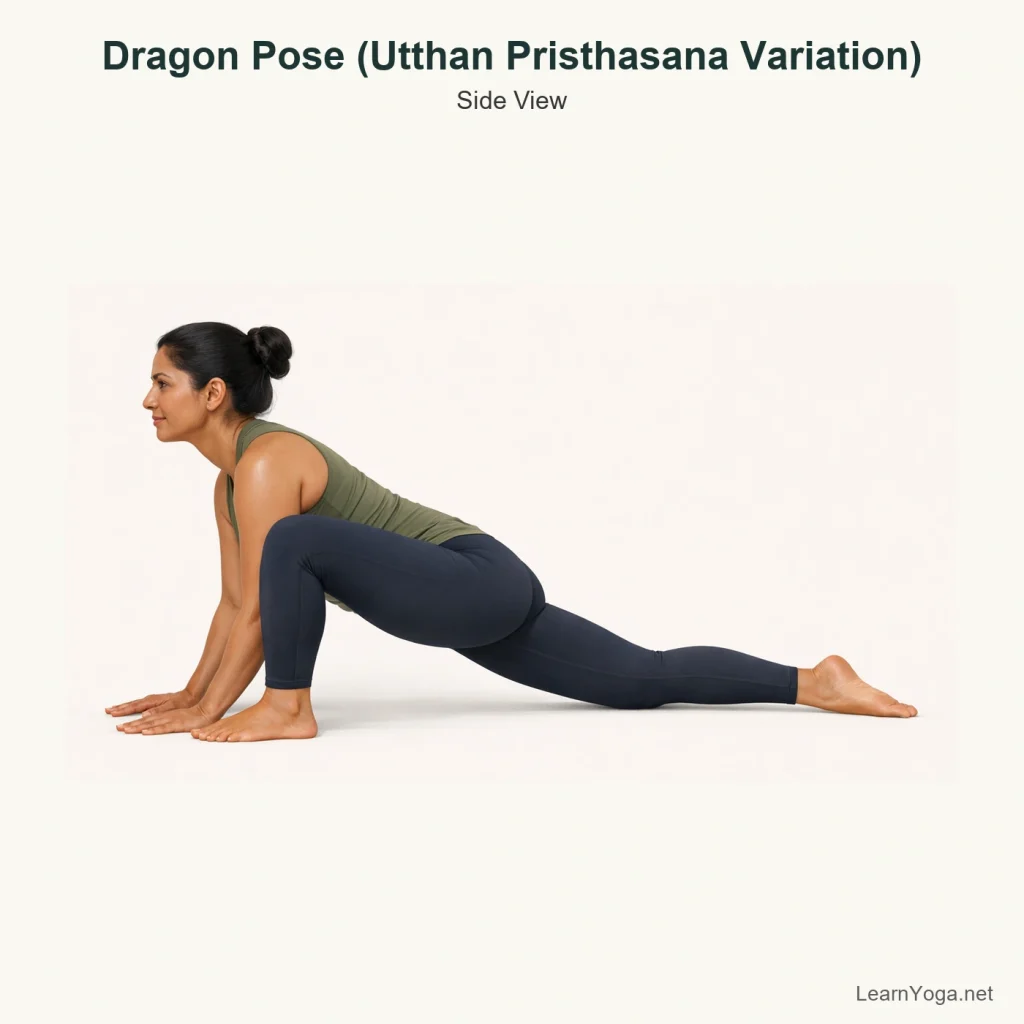
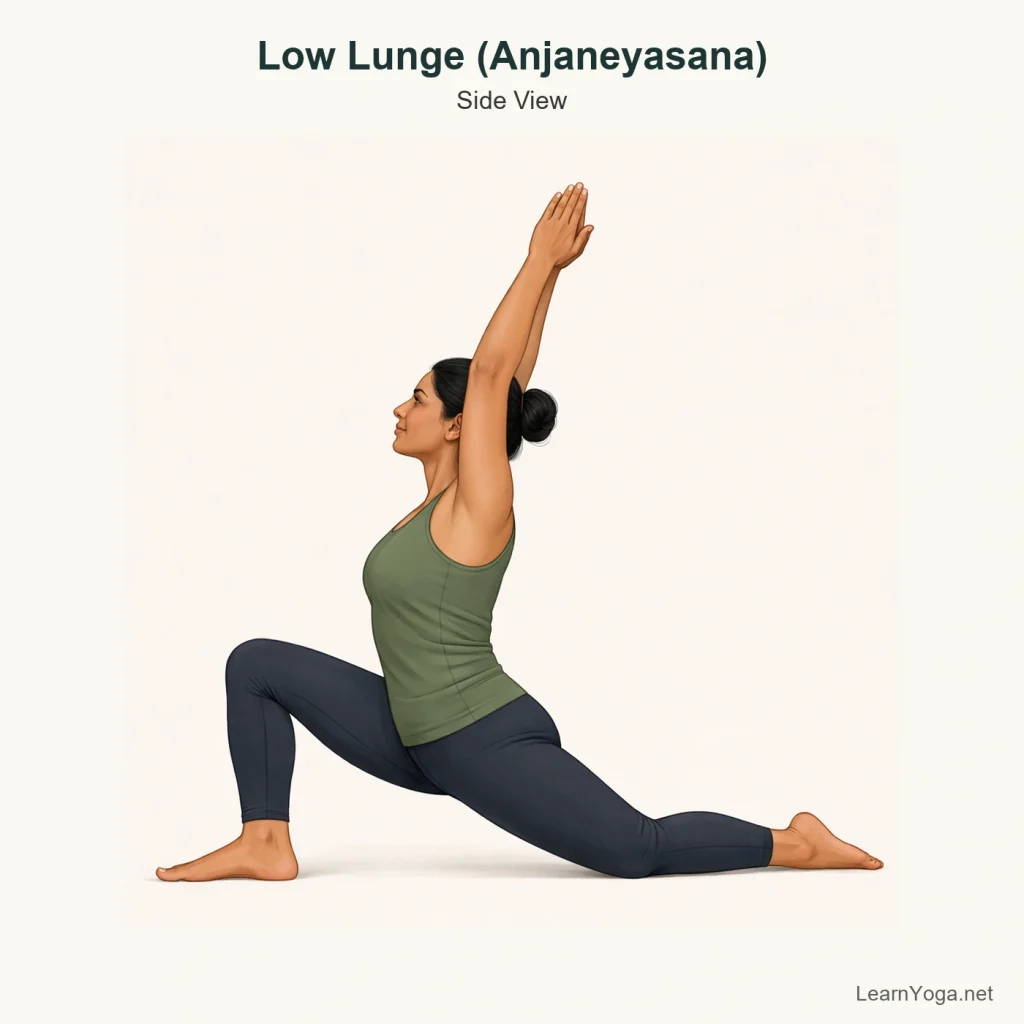
Dragon Pose is a low lunge variation that brings a stronger stretch into the front of the back hip while asking the front hip and inner thigh to open. It can be a useful preparation for deeper lunges and hip-opening work, but it does not need to be pushed far to be effective.
Dragon Pose is often practised as a floor-based lunge with the hands inside the front foot or framing it. The shape can feel quite direct in the hip flexors, groin and outer hip, so it helps to move in gradually. A smaller version is often the better choice, especially if the back knee or front hip feels crowded. Comfortable range differs from body to body.
How to do Dragon Pose
Start in Low Lunge with your right foot forward and your left knee on the floor.
Walk your right foot a little to the right so there is room for your torso.
Bring both hands to the floor inside the front foot. If the floor feels far away, place your hands on blocks.
Slide the front foot forward slightly and the back knee back slightly until you feel a clear but manageable opening through the front of the left hip and around the right inner thigh.
Keep the front knee roughly over or slightly in front of the ankle if that suits your range, and let the heel stay grounded.
Lengthen the spine on each inhale rather than collapsing your chest toward the floor.
On each exhale, soften the hips only enough to stay steady in the breath and face.
Stay for 3 to 6 breaths, then press your hands down, shift your hips back a little, and return to Low Lunge before changing sides.
Yogita's tip
If the front hip feels pinched instead of open, widen the front foot a little more and keep more weight in your hands. That usually gives the thigh space to settle into the socket.
Benefits
Creates a stronger opening through the hip flexors than a standard low lunge.
Can improve tolerance for deep hip flexion in floor-based lunges and squats.
Helps you practise supporting the pelvis and spine while the legs move into different ranges.
Prepares the hips and thighs for poses such as Lizard Pose, Pigeon Pose and Half Splits.
Common mistakes
Pushing the hips down quickly instead of letting the shape build over a few breaths.
Letting the front knee roll out or in without tracking what feels stable in the foot and hip.
Dropping the chest heavily toward the floor and shortening the front of the body.
Keeping the hands too low when blocks would make the pose more spacious.
Forcing the back knee too far behind the body and turning the stretch into strain.
Make it work for you
Hands on blocks
Place one block under each hand to raise the floor. This usually makes it easier to keep the chest broad and reduce the feeling of being stuck in the hips.
Blanket under back knee
Fold a blanket under the back knee if kneeling pressure is uncomfortable. You can also double the padding if the floor is hard.
Smaller Dragon
Keep the front foot less far forward and the back knee a little closer in. Stay higher in the torso and use your hands for support.
Alternatives
Low Lunge
Keep the hands framing the front foot instead of moving them inside it, and take a shorter stance.
Use this if Dragon Pose feels too strong in the hips or groin.
Half Splits Pose
Shift the hips back over the rear knee and straighten the front leg to a comfortable degree.
Use this if you want hamstring work without the same depth of front-hip compression.
Supported Child's Pose
Rest your torso on a bolster or stacked blankets with the knees as wide or narrow as comfortable.
Use this if getting low to the floor or loading one knee at a time is not suitable today.
Common variations
Classic Dragon
Hands on the floor or blocks inside the front foot, with the back knee down and the torso upright enough to breathe steadily.
Forearm Dragon
A deeper version where the forearms come to blocks or the floor if that happens without collapsing the chest or straining the groin.
Twisted Dragon
From Dragon, one hand stays grounded while the other arm reaches into a gentle twist toward the front-leg side.
Safety and contraindications
When to avoid or get individual guidance
Recent knee irritation that makes kneeling uncomfortable.
Groin strain or front-of-hip irritation aggravated by deep lunges.
Pad the back knee if kneeling pressure is uncomfortable.
Keep the pose milder if you feel pinching at the front of the hip or pulling at the inner knee.
Use blocks under the hands if dropping low makes your lower back round or your breath feel restricted.
Come out of Dragon Pose if you get sharp pain in the knee, groin, or front of the hip. Discomfort that does not settle once you ease off is a good reason to pause deeper lunge work and get individual guidance before trying it again.
Accessibility and limited mobility
If getting down to the floor is difficult, build the pose with blocks under the hands and extra padding under the back knee so the level change is smaller.
Older adults or anyone with reduced hip range may prefer a shorter stance and a more upright torso rather than trying to sink low.
If kneeling is not comfortable, choose Low Lunge briefly with plenty of support or use Supported Child's Pose instead.
Easier options
Use these related poses when you want a more accessible way to practise a similar movement or prepare for this pose.
It can, depending on your proportions and the version you are doing. In Dragon Pose, some people naturally move the knee a little forward. What matters more is that the foot feels grounded and the knee does not feel strained or wobbly.
What should I do if my back knee hurts?
Add more padding first. A folded blanket often solves the problem. If the pressure is still there, shorten the stance and stay higher, or choose Low Lunge instead of Dragon Pose that day.
Where should I feel this pose most?
Many people feel it in the front of the back hip and thigh, and also around the front hip or inner thigh of the bent leg. You may feel one area more strongly than another. Sharp pain or pinching is a sign to ease out.
Do I need to come onto my forearms?
No. Forearms make the pose deeper, not better. If dropping lower rounds your spine, tightens your jaw or makes the breath choppy, stay on your hands or on blocks.
Reviewed for yoga instruction
Yogita
Certified Yoga Instructor with 5+ years of Teaching and Consistent Practice