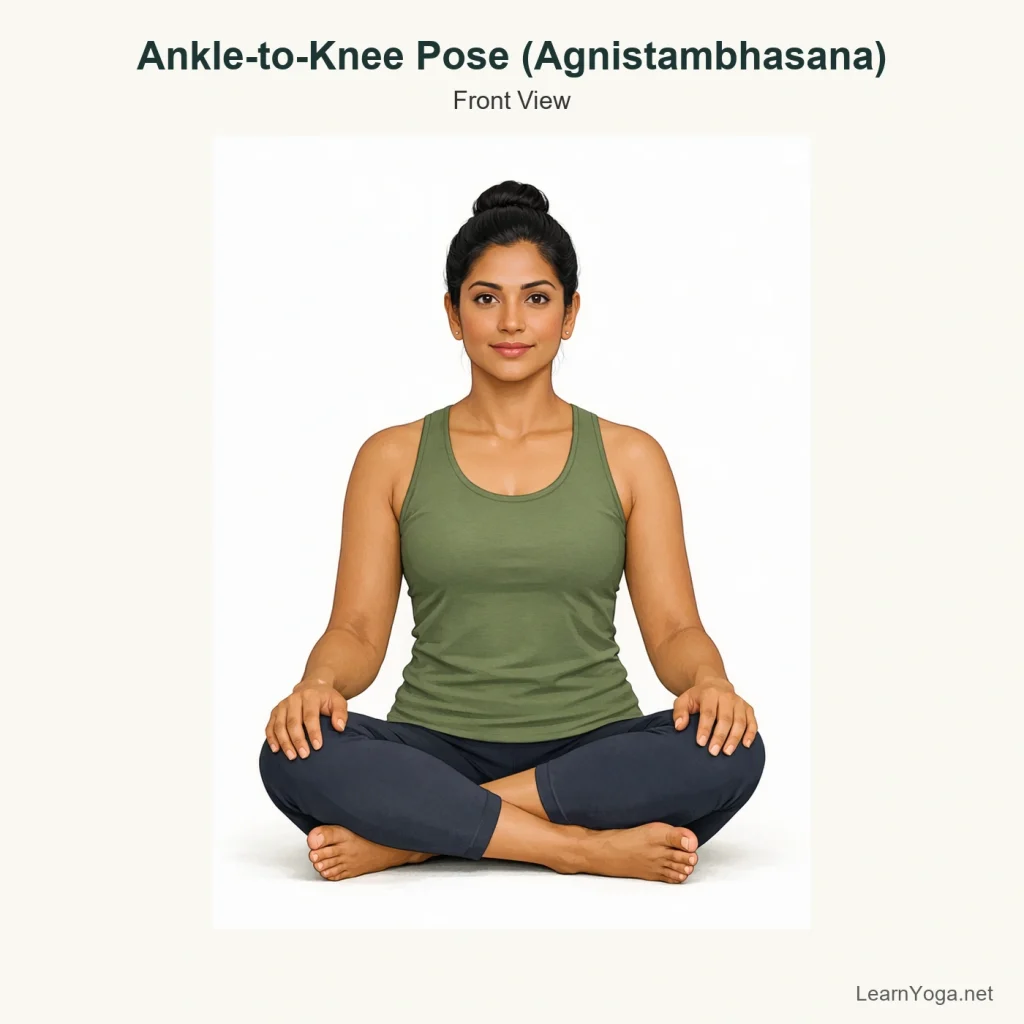
Cow Face Pose combines a stacked-leg seat with an overhead and behind-the-back arm position. It can create a clear stretch around the outer hips, shoulders and triceps, but it usually works best when you adjust the seat and use a strap rather than trying to force the full shape.
Cow Face Pose asks for two different things at once: a fairly strong outer-hip position in the legs and a shoulder bind in the arms. Some people find one half accessible and the other very restricted. That is normal. You can practise the legs, the arms, or both together. A steady upright spine matters more than making the hands touch.
How to do Cow Face Pose
Sit with both legs extended in front of you.
Bend the left knee and bring the left foot beside the right hip.
Cross the right leg over the left so the right knee stacks above the left, with the right foot beside the left hip. If both sitting bones do not stay grounded, sit on a folded blanket or keep the bottom leg straight.
Lift through the spine and let the front ribs stay easy rather than pushing forward.
Reach the right arm up, bend the elbow and bring the right hand down between the shoulder blades.
Take the left arm out to the side, turn the thumb down, then bend the elbow and bring the left hand up the back. If the hands do not meet comfortably, hold a strap or towel between them.
Keep the head balanced over the spine. Let the top elbow point mostly upward and the lower elbow draw gently down rather than yanking on the shoulders.
Stay for 5 to 10 slow breaths. On each inhale, grow taller through the crown of the head. On each exhale, soften the jaw, shoulders and outer hips.
Release the arms first, uncross the legs, stretch the legs forward for a moment, then repeat on the second side.
Yogita's tip
If the top elbow keeps drifting out to the side, it often helps to pause and lift the upper arm straight up first before bending the elbow. That usually gives the shoulder a cleaner path than trying to place the hand behind the back too early.
Benefits
Can increase mobility around the outer hips and glutes.
Gives a focused stretch through the triceps, armpit area and the back of the shoulder.
Encourages an upright seated position with more awareness of how the ribs and spine are arranged.
Can help you notice left-right differences in the hips and shoulders.
Common mistakes
Forcing the knees to stack even when the pelvis tips backward or one sitting bone lifts.
Pulling the hands together aggressively and turning the pose into a shoulder strain.
Letting the head jut forward and the chest collapse while focusing only on the bind.
Sitting directly on the heel or foot instead of placing the feet beside the hips.
Ignoring the leg setup and only arranging the arms, which often makes the seat unstable.
Make it work for you
Sit on a folded blanket
Place one or more folded blankets under the sitting bones. The small lift often makes it easier to sit upright and reduces strain at the hips and knees.
Use a strap between the hands
Hold a yoga strap, belt or towel between the top and bottom hands. Walk the hands toward each other only until the shoulders can stay broad and the breath remains steady.
Bottom leg straight
Keep the lower leg extended forward and cross only the top leg over. This keeps some of the hip shape while reducing the demand on the knees and the intensity in the seat.
Alternatives
Cow Face Arms only
Sit in Easy Pose or on a chair and practise just the arm position with or without a strap.
Use this if the shoulders need attention but the full leg position feels too compressed.
Figure Four on the back
Lie on your back and cross one ankle over the opposite thigh, then draw the legs in only as far as is comfortable.
Use this if the seated hip position bothers the knees or is difficult to organise.
Simple cross-legged seat with one overhead triceps stretch
Sit comfortably with the legs loosely crossed and take one arm overhead, bending the elbow while the other hand lightly supports it.
Use this if both the stacked legs and shoulder bind are too much on the same day.
Common variations
Cow Face Arms in a seated position
The arm bind is practised without the stacked-leg seat, often in Easy Pose, Hero Pose or on a chair.
Forward-leaning Cow Face Pose
From the stacked-leg seat, the torso folds forward over the top knee to shift the emphasis more toward the outer hips.
Cow Face Pose with a strap
A strap connects the hands behind the back so the shoulders can work without forcing the bind.
Safety and contraindications
When to avoid or get individual guidance
Recent or aggravated knee irritation may make the full leg position unsuitable.
Skip the full bind if you have a painful shoulder flare or cannot raise the arm overhead without strain.
Move in slowly if your knees are sensitive. The stacked-leg seat should feel strong but not sharp or pinching.
Use a strap for the hands rather than forcing the shoulders into the bind.
If the pelvis tips backward strongly, sit on support or simplify the legs.
Sharp knee pain in the stacked-leg seat, or catching or pinching in the shoulder during the bind that does not ease after you come out, are good reasons to pause the full version and get individual guidance before trying it again.
Accessibility and limited mobility
A folded blanket or block under the sitting bones can make the pose much more manageable for people with limited hip range or a rounded lower back in seated positions.
If getting down to the floor is difficult, practise the arm position sitting on a sturdy chair.
Older adults or anyone with sensitive knees may prefer to keep the bottom leg straight rather than stacking both knees.
If shoulder range is limited, use a strap and leave a generous gap between the hands instead of chasing the clasp.
Easier options
Use these related poses when you want a more accessible way to practise a similar movement or prepare for this pose.
No. The tidy stacked shape is not the main goal. If trying to stack the knees makes you lean back, lift a sitting bone, or feel pressure in the knees, sit on support or keep the bottom leg straight.
What if my hands are nowhere near each other?
That is very common. Hold a strap, belt or towel between the hands. Keep some space if needed, and focus on lifting the spine and keeping the breath smooth rather than forcing the clasp.
Where should I feel Cow Face Pose the most?
Many people feel it in the outer hips and glutes from the legs, and in the triceps, armpit area and back of the shoulder from the arms. You should not feel sharp pain in the knees or a pinching shoulder.
Can I practise only the arms or only the legs?
Yes. In fact, that is often the most useful way to learn it. You can do Cow Face Arms in a chair or easy seated position, or set up the legs without the bind and rest the hands on the floor or thighs.
Why do I keep rounding my back in this pose?
Usually the hips are asking for more space. Try sitting on folded blankets, loosening the leg setup, or keeping the lower leg straight. Once the pelvis can tip a little more upright, the spine usually follows much more easily.
Reviewed for yoga instruction
Yogita
Certified Yoga Instructor with 5+ years of Teaching and Consistent Practice