
Flying Splits Pose
Eka Pada Koundinyasana II
Flying Splits Pose is a strong arm balance built from a twisted standing setup. It combines wrist and shoulder loading with hamstring length, hip mobility and a clear forward shift of weight.

Explore by goal
Explore yoga poses that encourage comfortable range of motion through the hips, hamstrings, shoulders, spine and other commonly tight areas. Use the instructions and modifications to work gradually rather than forcing a deeper stretch.
The poses below share this goal classification, but a useful practice still needs an appropriate order, level and pace. Use the pose guides for modifications and safety notes, or let the Practice Builder arrange a complete sequence.
Flying Splits Pose is a strong arm balance built from a twisted standing setup. It combines wrist and shoulder loading with hamstring length, hip mobility and a clear forward shift of weight.

Fire Log Pose is a seated outer-hip opener with the shins stacked one over the other. The work is mostly in the hips, but the knees can complain if the hips are not ready, so it helps to set it up patiently and use support when needed.
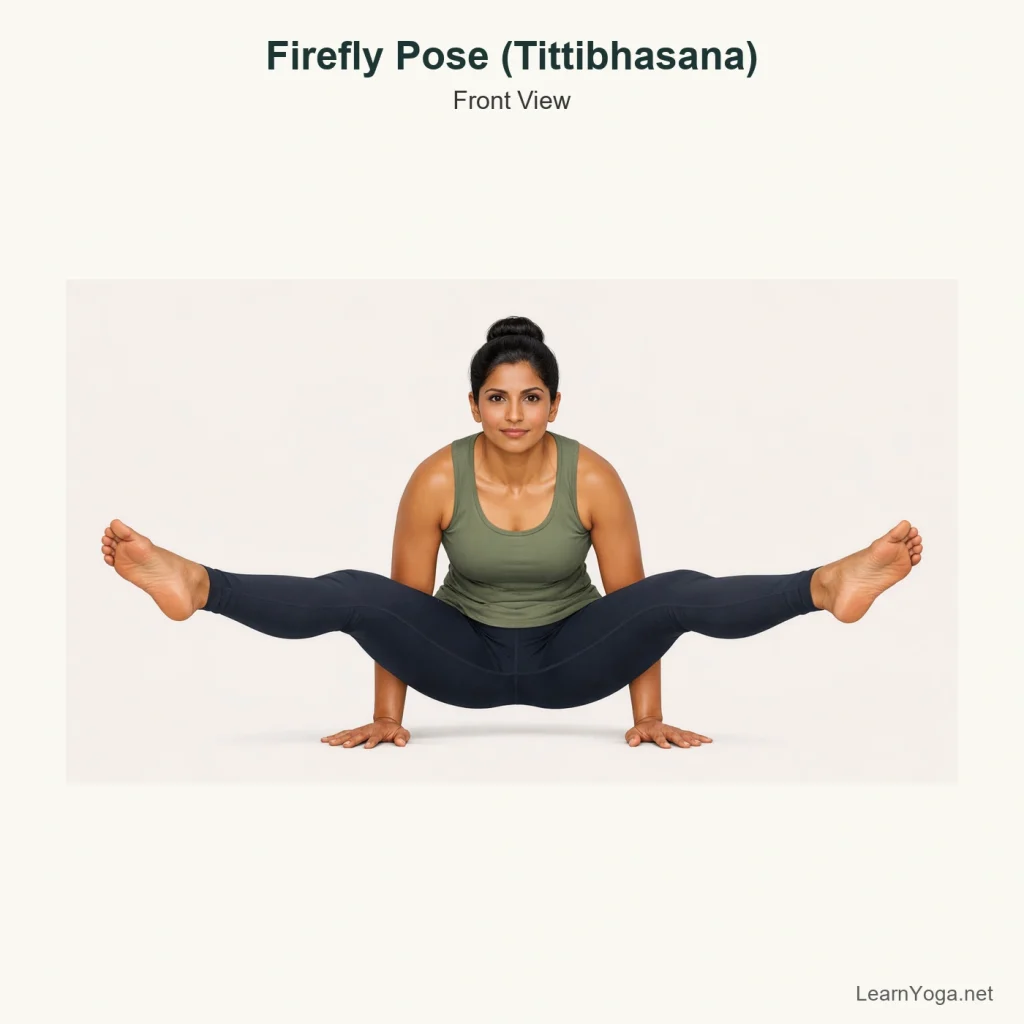
Firefly Pose is a strong arm balance with the legs reaching forward and the hips lifted from the floor. It asks for deep hip flexion, hamstring length, steady hands and a clear shift of weight into the arms.

Embryo Pose is a compact seated balance traditionally approached from Lotus, with the arms threaded through the legs and the body balancing upright. It asks for a very easy Lotus setup, calm hips and knees, and enough steadiness in the centre to stay lifted without straining.
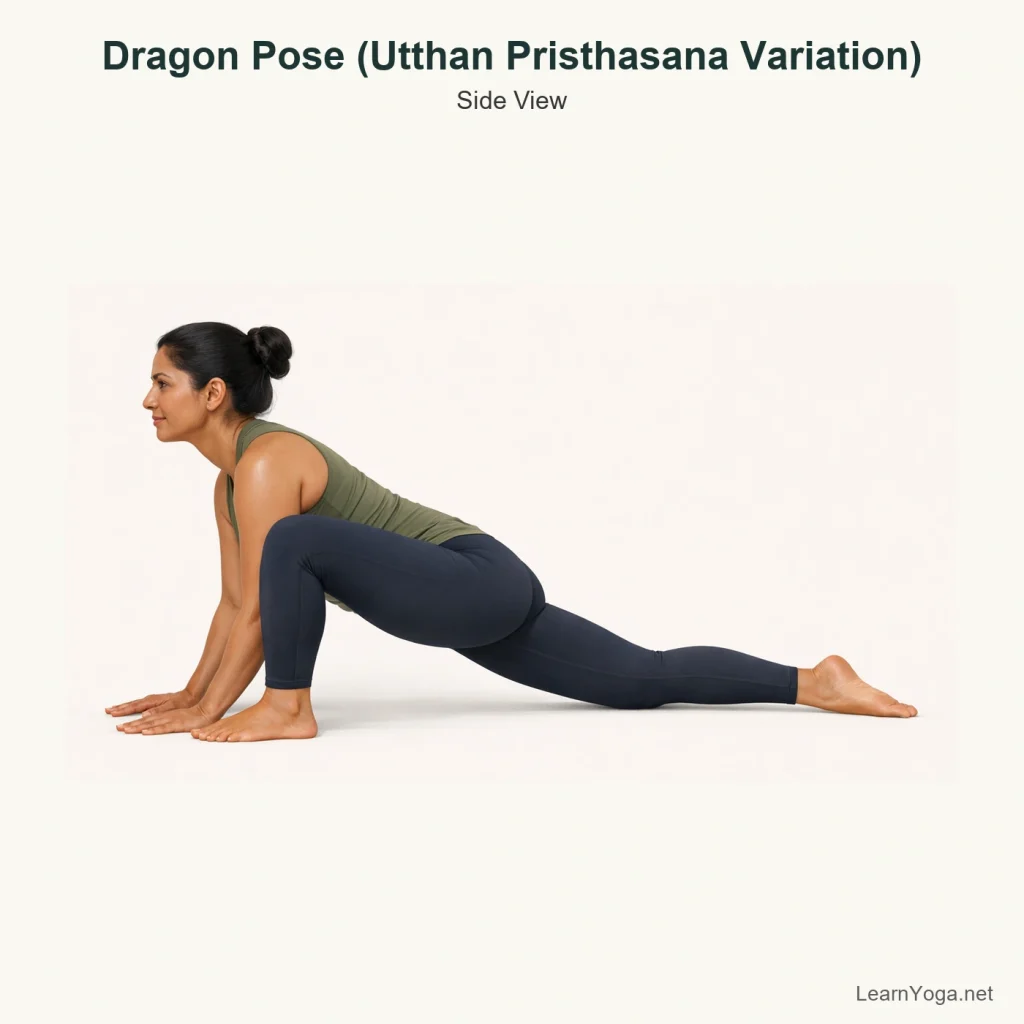
Dragon Pose is a low lunge variation that brings a stronger stretch into the front of the back hip while asking the front hip and inner thigh to open. It can be a useful preparation for deeper lunges and hip-opening work, but it does not need to be pushed far to be effective.

Dragonfly Pose is a seated wide-leg variation that combines a side bend and forward angle. It asks for hamstring length, side-body space, and enough support under the pelvis to keep the spine from collapsing.
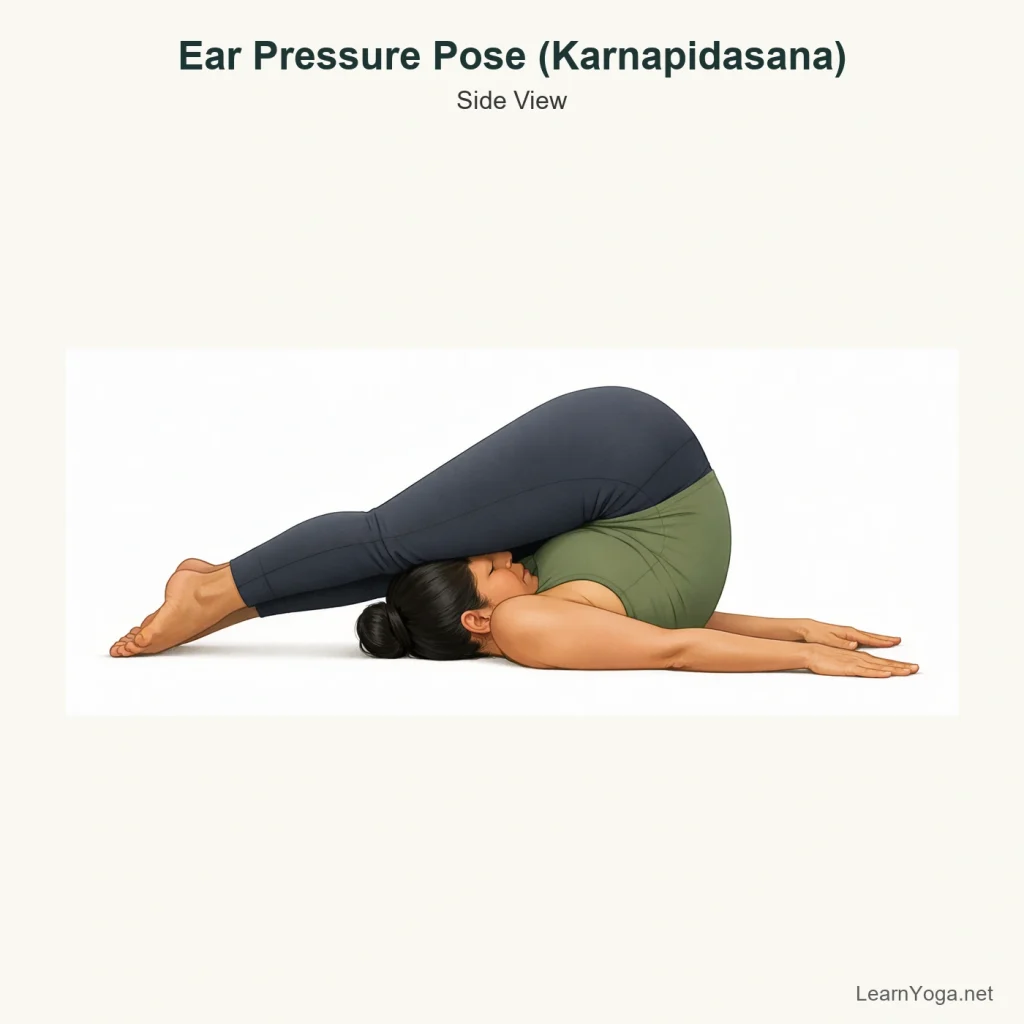
Ear Pressure Pose is a compact inversion usually entered from Plow Pose, with the knees bending toward the ears. It asks for controlled spinal flexion and a stable shoulder base more than extra force.

Deer Pose is a seated hip-opening shape with one shin in front and one leg folded behind. It gives you a clear way to explore rotation through the hips while staying fairly upright, and it can also become a gentle twist if that suits your body.

Compass Pose is a deep seated shape that combines hamstring length, outer-hip mobility, side bending and spinal rotation. It usually works best when you build it patiently and stop well before the knee or lower back starts doing the work for the hip.

Butterfly Forward Fold is a seated forward bend with the soles of the feet together and the knees opening out. It gives a gentle way to explore the inner hips while also practising a hip hinge rather than collapsing the back.
Learn how pose order changes a complete session in How Yoga Sequencing Works. If you are learning a particular pose, use the Pose Progression Explorer to find preparation and possible next steps.