
Warrior III
Virabhadrasana III
Warrior III is a standing balance where the body reaches into one long line from heel to head. It asks the standing foot, hip and core to organise clearly while the back leg stays active.

Explore by goal
Build steadiness, coordination and body awareness with yoga poses that challenge balance in different ways. Explore accessible standing balances and more demanding options, with clear instructions and modifications to help you practise with control.
The poses below share this goal classification, but a useful practice still needs an appropriate order, level and pace. Use the pose guides for modifications and safety notes, or let the Practice Builder arrange a complete sequence.
Warrior III is a standing balance where the body reaches into one long line from heel to head. It asks the standing foot, hip and core to organise clearly while the back leg stays active.

Warrior I is a standing lunge with the back heel grounded and the arms reaching up. It asks for steadiness through the legs while the chest lifts and the spine lengthens, and it often works best with a slightly shorter stance than people expect.

Warrior II is a wide standing pose with one knee bent, one leg straight and the arms reaching out to the sides. It builds steadiness in the legs and helps you practise keeping the chest broad without hardening the lower back.
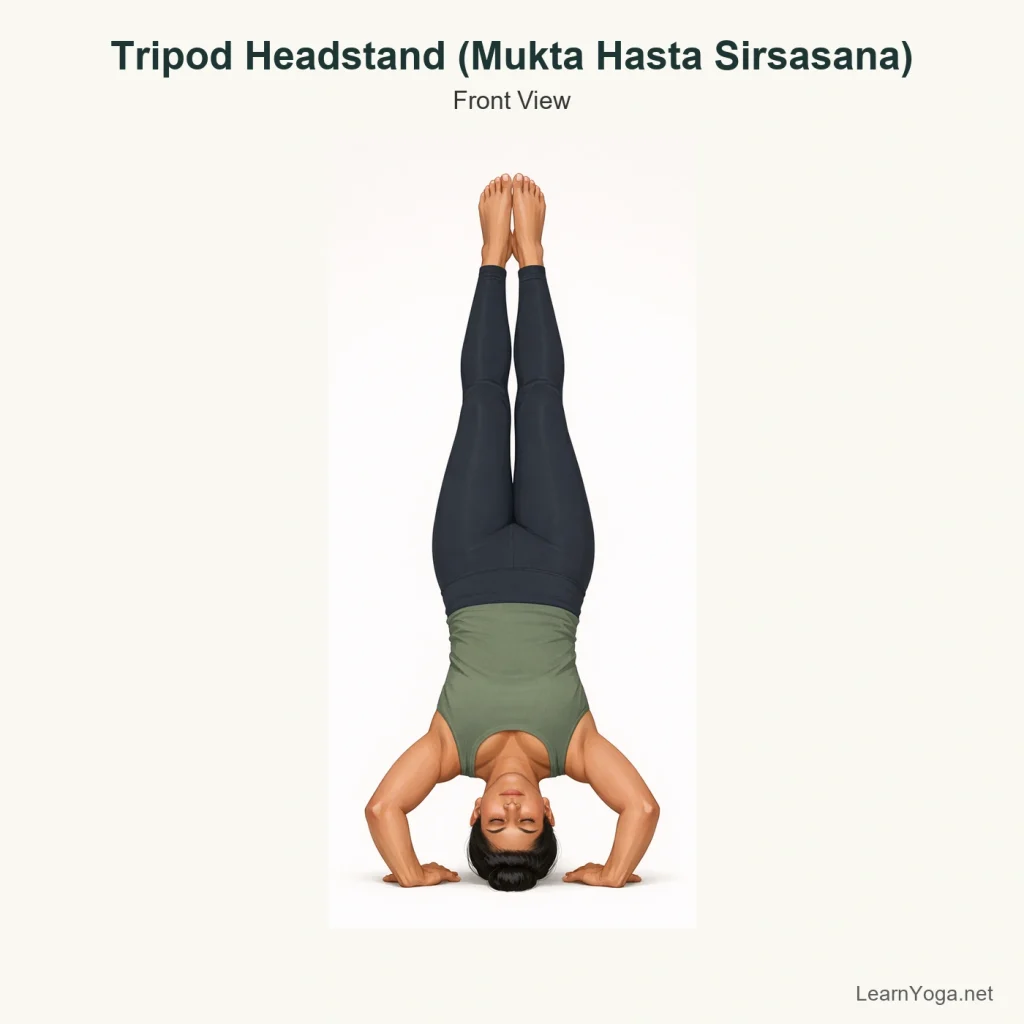
Tripod Headstand is a compact inversion where the head and hands make a three-point base. It asks for shoulder support, wrist tolerance, balance and clear control through the centre of the body rather than a hard kick upward.
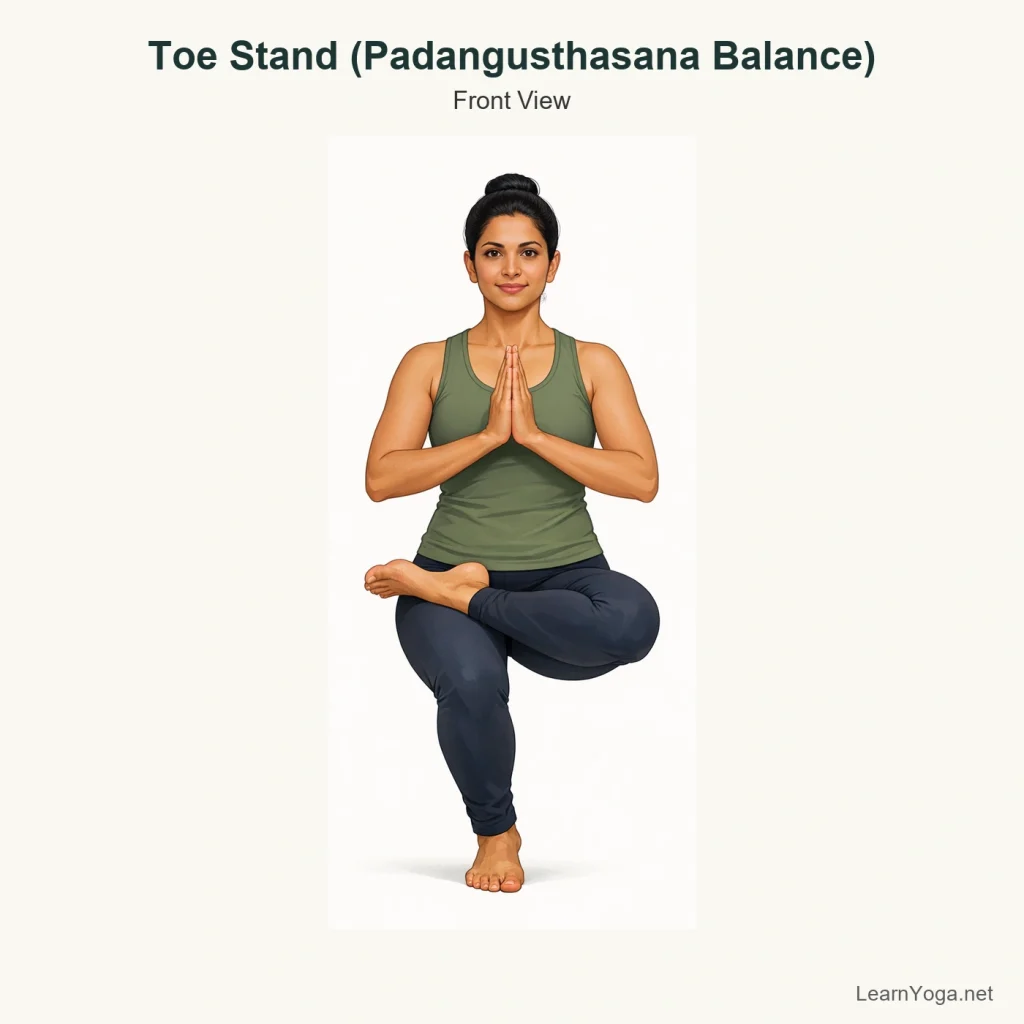
Toe Stand is a compact one-leg balance done from a figure-four setup. It asks for ankle stability, control through the standing leg and enough hip mobility to lower without collapsing into the knee.
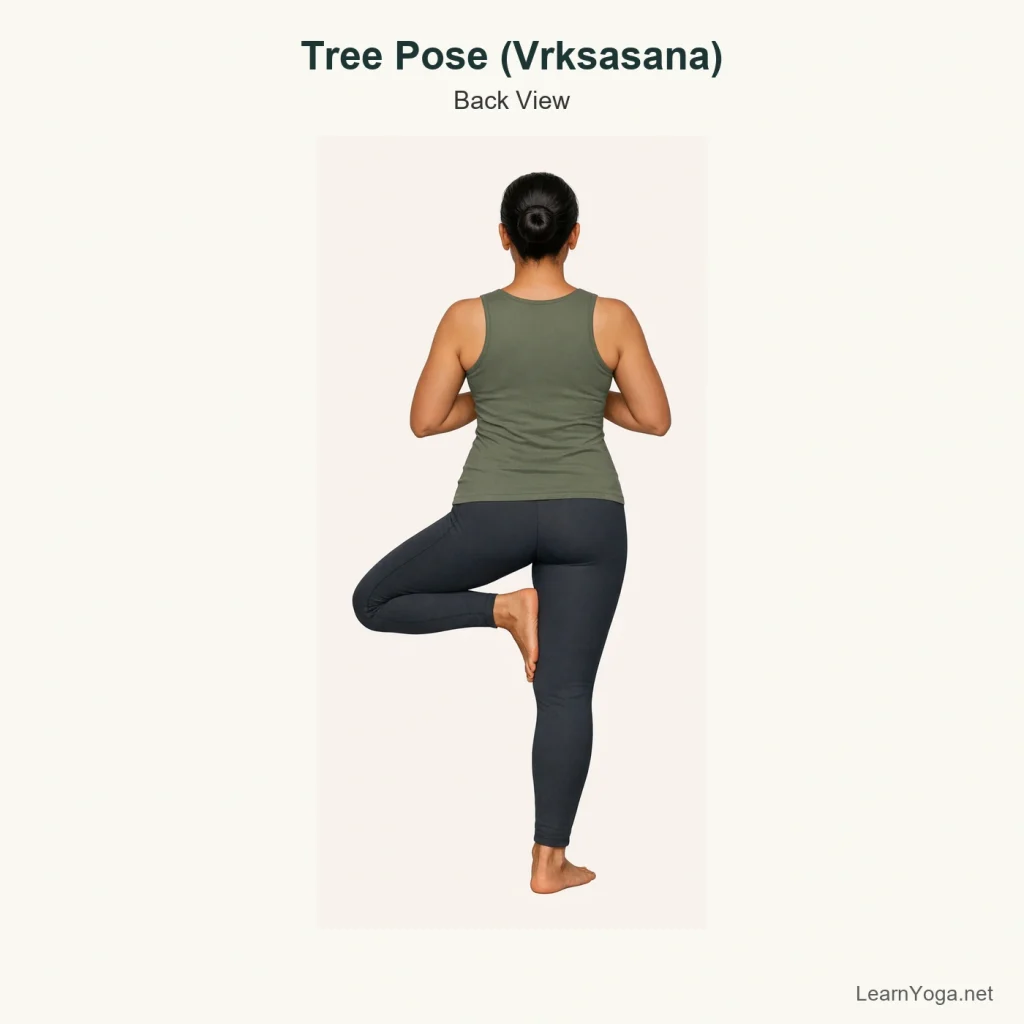
Tree Pose is a simple standing balance that asks one leg to stabilise while the other hip opens outward. It helps you organise the feet, pelvis and spine without needing a large range of motion.

Standing Split is a one-legged forward fold that asks for balance, hamstring length and clear work through the standing hip. It does not need to become a full split shape to be useful.

Sugarcane Pose builds on Half Moon by adding a bend in the lifted leg and a reach for the foot. It asks for balance, hip stability and a controlled backbend, so it works best when you enter it patiently rather than trying to grab the foot quickly.

Standing Hand-to-Big-Toe Pose is a one-leg balance that combines steady standing, hip flexion and hamstring length. The shape does not need a straight lifted leg to be useful. For many people, the clearest version is with the knee bent and the spine upright.

Side Crow is a compact arm balance with a twist. It asks for wrist loading, a rounded upper back, clear core support and a forward shift of weight more than a big jump upward.
Learn how pose order changes a complete session in How Yoga Sequencing Works. If you are learning a particular pose, use the Pose Progression Explorer to find preparation and possible next steps.