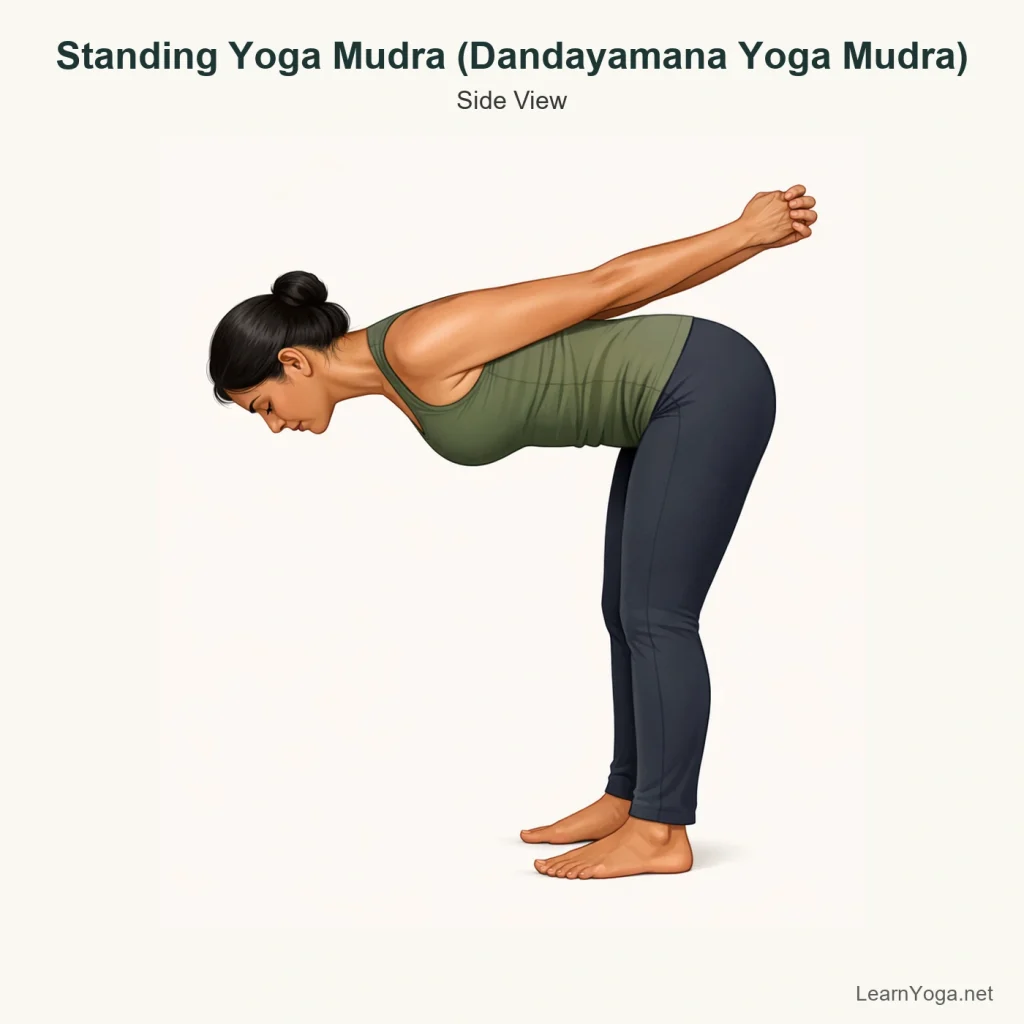
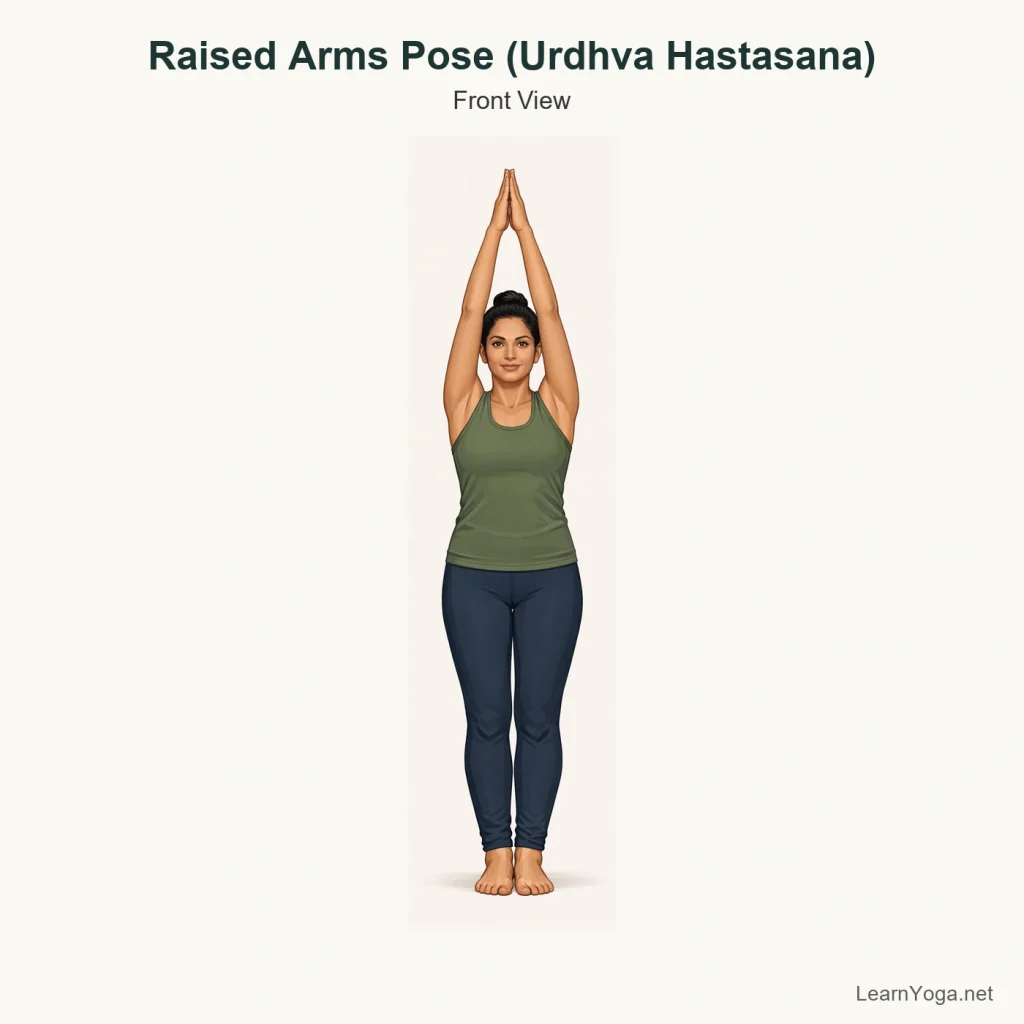
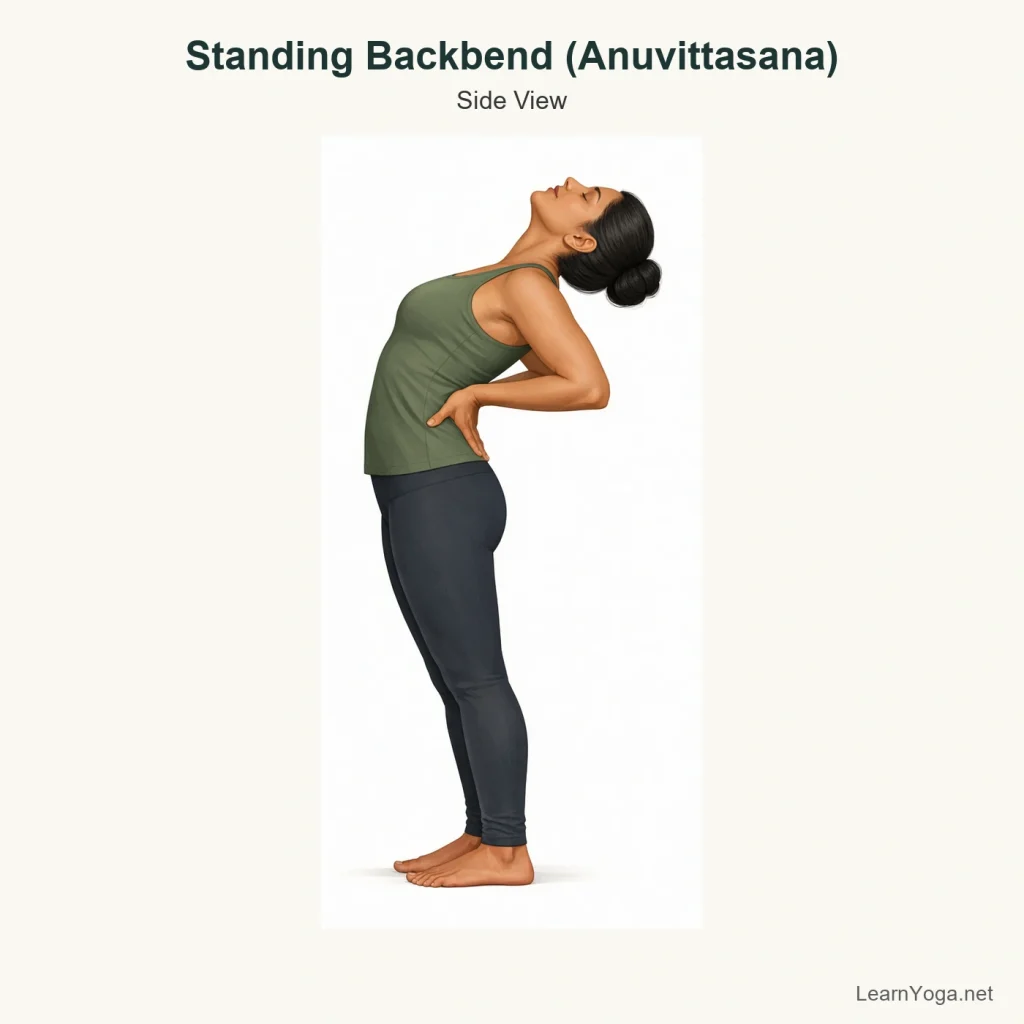
Standing Yoga Mudra is a simple standing fold with the hands joined behind the back. It brings together a mild shoulder opening, a lift across the chest and a forward hinge from the hips. The shape does not need to be deep to be useful.
This pose is often practised as a quiet standing stretch rather than a strong effort. The work is shared between the legs, the shoulder position and the way you fold. For some bodies, keeping the knees soft and the hands low behind the back makes the pose clearer than trying to straighten everything.
How to do Standing Yoga Mudra
Stand with your feet about hip-width apart and spread your weight evenly through both feet.
Take your hands behind your back and either interlace your fingers or hold a strap between your hands.
Straighten your arms only as much as is comfortable and let the collarbones widen without pushing the ribs forward.
Inhale and grow taller through the spine.
Exhale and hinge from the hips, bending your knees a little if your hamstrings or lower back feel tight.
Let your head and neck stay easy while your hands move slightly away from your back only if the shoulders allow it without strain.
Stay for 3 to 5 breaths, using each inhale to create length through the front of the body and each exhale to soften into the fold.
To come up, bend your knees, keep the belly gently supportive and rise on an inhale with the spine long before releasing the hands.
Yogita's tip
If the shoulders feel stuck, do not force the hands higher. Keep the knuckles or strap closer to your back and focus on broadening across the collarbones first; the fold usually feels cleaner that way.
Benefits
Opens the front of the shoulders and chest in a simple, recognisable way.
Gives a gentle stretch through the backs of the legs as you hinge forward.
Helps you practise folding from the hips instead of rounding heavily through the waist.
Can bring steadier attention to breath and balance while standing still.
Common mistakes
Locking the knees and then pulling on the hamstrings.
Forcing the hands far away from the back and turning the pose into a shoulder strain.
Dropping into a rounded spine instead of hinging from the hips.
Pushing the ribs forward to make the bind look bigger.
Taking the feet too narrow and feeling wobbly for no good reason.
Make it work for you
Use a strap between the hands
Hold a strap behind your back instead of interlacing the fingers. Keep some distance between the hands so the shoulders can open without gripping.
Bend the knees
Keep a soft bend in both knees as you fold. This usually reduces pulling in the hamstrings and gives the pelvis more room to tip forward.
Half fold
Pause with your torso partway down rather than folding fully. Keep the chest broad and the spine long.
Alternatives
Standing Forward Fold with hands on thighs
Hinge forward only halfway and place your hands on your thighs for support.
Use this if the shoulder bind is the main issue or if you want less pull on the back of the legs.
Reverse Prayer Pose
Stay upright and bring the palms or backs of the hands together behind the back without adding the forward fold.
Use this if you want the shoulder and chest work without the hamstring demand.
Chair-supported forward hinge
Stand facing a chair and rest your hands on the chair seat or back as you fold slightly from the hips.
Useful if balance feels uncertain or getting lower increases back or hamstring tension.
Common variations
Wide-stance Standing Yoga Mudra
Take the feet a little wider for a steadier base and slightly less pull through the hamstrings.
Strap-bound variation
Hold a strap behind the back instead of clasping the hands to make the shoulder position more accessible.
Dynamic breath-led variation
Inhale to rise halfway or fully, then exhale to fold again for several rounds instead of holding still.
Safety and contraindications
When to avoid or get individual guidance
Recent shoulder strain may make the bind uncomfortable.
Skip the deeper fold if it aggravates low back or hamstring pain.
If standing balance is unreliable today, practise with chair support.
Keep the knees soft if the backs of the legs feel tight.
If the shoulder bind feels pinchy, use a strap or keep the hands lower.
Move slowly when coming in and out so the pose stays steady.
Come out of Standing Yoga Mudra when sharp pain shows up in the shoulders, lower back, or hamstrings, and do not push deeper into the fold or bind. Choose an easier version, and get individual guidance before practising it again.
Accessibility and limited mobility
A chair in front of you can make the fold feel more secure if balance is inconsistent.
If getting into a shoulder bind is not practical, keep the hands on the hips or hold a strap with a wide grip.
For older adults or anyone with limited hamstring range, a small forward hinge with bent knees is often enough.
This pose does not require touching the head to the legs; comfortable range will vary from body to body.
Easier options
Use these related poses when you want a more accessible way to practise a similar movement or prepare for this pose.
Only far enough that you can still hinge from the hips and breathe easily. If your back rounds a lot or your shoulders feel pulled, come higher. A smaller shape is often more useful than a deeper one done with strain.
What if I cannot clasp my hands behind my back?
Use a strap, belt or small towel between your hands. A wider grip gives the shoulders more space and lets you keep the chest open without forcing the bind.
Should my legs be completely straight?
Not necessarily. Many people do better with a slight bend in the knees, especially if the hamstrings feel tight or the lower back starts to tug. Straight legs are not the goal if they make the fold heavy or tense.
Why do I feel this more in my shoulders than in the fold?
That usually means the bind is currently the strongest part of the pose for your body. Lower the hands closer to the back, widen the grip with a strap, or fold less. Then the work can spread more evenly through the whole shape.
Reviewed for yoga instruction
Yogita
Certified Yoga Instructor with 5+ years of Teaching and Consistent Practice