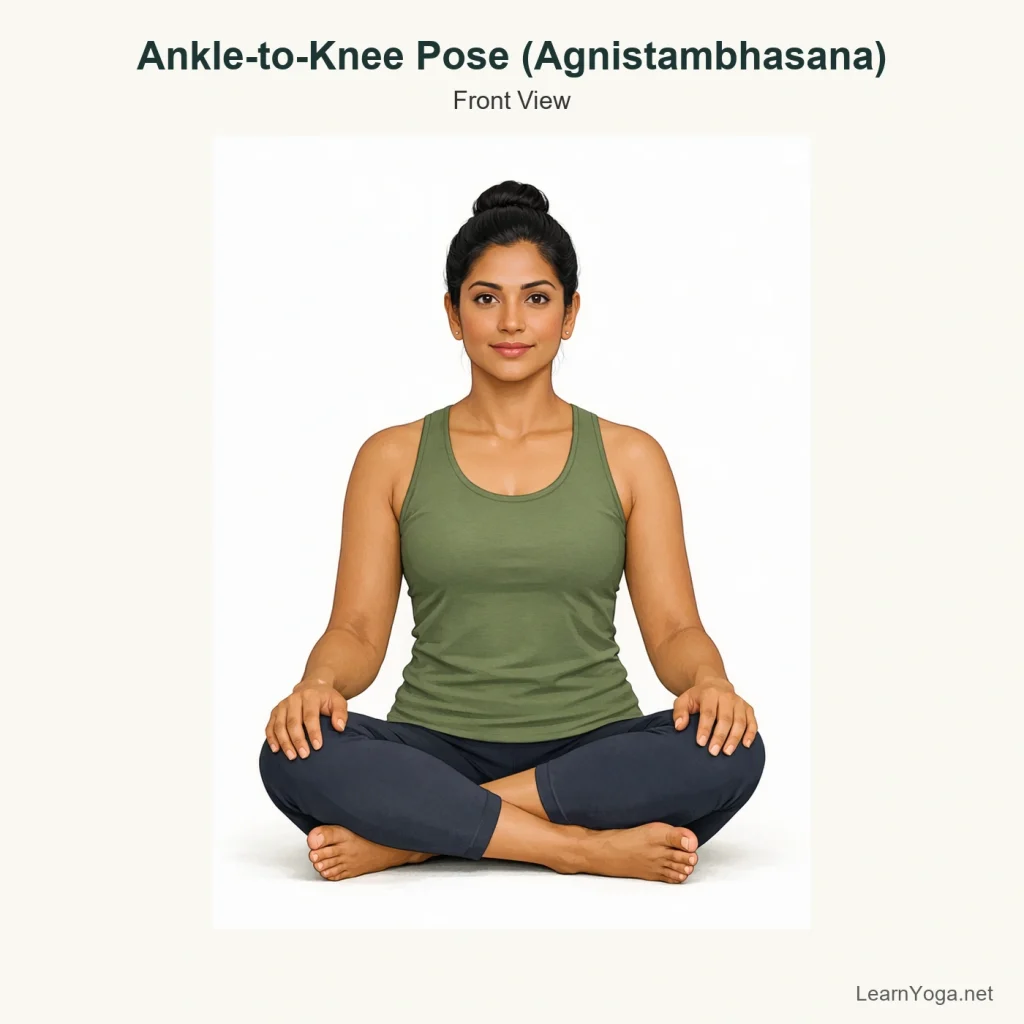
Square Pose is a seated cross-legged hip opener where the shins move toward a stacked, square shape. It can be a steady way to explore the outer hips, but it works best when you sit high enough to keep the knees and ankles comfortable.
In this pose, one shin comes in front of the other and both lower legs angle toward parallel. Some bodies will look very square here, and some will not. That is fine. The useful work is usually in the outer hips and the upright seat, not in forcing the knees downward.
How to do Square Pose
Sit on a folded blanket or block if your lower back rounds easily or your knees lift a lot.
Bring one shin in front of you and place the other shin on top, ankle over knee and knee over ankle as much as is comfortable.
Flex both feet gently so the ankles stay awake rather than collapsing.
Place your hands beside you and sit tall through the centre of the chest.
Stay upright for a few breaths, or if the hips allow, hinge forward a little from the pelvis while keeping the spine long.
Keep the jaw, shoulders and belly soft, and let the breath stay even.
To come out, lean back slightly, uncross the top leg first, and switch sides.
Yogita's tip
If the top foot keeps sickling or going floppy, draw the toes back a little more. That small action often makes the shape feel clearer in the outer hip and steadier at the knee.
Benefits
Explores external rotation at both hips in a contained seated shape.
Can create a clear stretch through the outer hips and glute area.
Gives practice sitting upright while the legs are crossed.
Works well near the end of practice when you want a quieter seated hold.
Common mistakes
Sitting too low and then rounding the lower back to stay in the pose.
Pushing the top knee down with the hand instead of adjusting the seat height.
Letting the feet go slack so the knees take more of the strain.
Folding forward deeply even though the hips already feel at their limit.
Make it work for you
Sit on height
Place one or more folded blankets under the sitting bones so the pelvis can tip slightly forward and the knees are less pulled.
Bottom leg farther forward
Move the bottom shin a little farther away from the pelvis. This usually reduces the intensity at the knees and hips.
Stay upright
Keep your hands on the floor or on blocks beside the hips and work only with an upright spine rather than adding a fold.
Alternatives
Figure Four on the back
Lie down and cross one ankle over the opposite thigh, then stay there or draw the legs in gently.
Use this if sitting upright is difficult or if the knees feel vulnerable in deeper crossed-leg shapes.
Bound Angle Pose
Sit with the soles of the feet together and knees apart, with support under the thighs if needed.
Use this if the square leg arrangement feels too strong or uneven.
Easy Pose
Sit in a simple cross-legged seat on a folded blanket and focus on length through the spine.
Use this if getting both shins toward parallel is not comfortable today.
Common variations
Upright Square Pose
Remain sitting tall with the hands on the floor or blocks, keeping the focus on the outer hips and the neutral spine.
Forward-Folding Square Pose
From the upright seat, hinge forward slightly from the hips while keeping length through the front body and enough ease in the knees.
Supported Square Pose
Place blankets under one or both knees if they hover high and need support.
Safety and contraindications
When to avoid or get individual guidance
Recent knee or hip irritation may make this shape uncomfortable.
Skip the forward fold if it strains the knees or lower back.
Keep both feet gently active to avoid dumping into the knees.
If you feel pinching in the knee, ease out, sit higher, or make the cross less tight.
A mild outer-hip stretch is fine, but sharp knee pain is not.
If this shape keeps causing sharp or catching pain around the knee joint or deep in the hip, stop and get individual advice before trying to push it farther.
Accessibility and limited mobility
Sitting on extra height often makes this pose much more workable for older adults or anyone with limited hip rotation.
If getting down to the floor is awkward, choose a reclined figure four shape instead.
If one knee sits much higher than the other or the pelvis tips strongly to one side, make the shape looser rather than trying to match an ideal picture.
Easier options
Use these related poses when you want a more accessible way to practise a similar movement or prepare for this pose.
Does the top ankle need to sit exactly over the bottom knee?
No. That stacked look is only a reference point. Many people will not reach it comfortably, especially at first. What matters more is that you can sit steadily, keep the feet gently active, and feel the work in the hips rather than strain in the knees.
Why do my knees sit very high in this pose?
Usually that means your hips want more space, not that you need to push harder. Sit on a folded blanket or two and make the cross a little looser. Supporting the knees can also help the legs settle without forcing them.
Should I fold forward or stay upright?
Either is fine. Staying upright is often the better starting point because it lets you organise the legs and notice whether the knees feel easy. Add only a small forward hinge if the hips allow it and the spine can stay long.
What should I do with my feet in Square Pose?
Keep both feet lightly flexed, as if drawing the toes back a little. You do not need a hard effort, just enough tone so the ankles do not collapse. That usually makes the pose feel more stable around the knees.
Reviewed for yoga instruction
Yogita
Certified Yoga Instructor with 5+ years of Teaching and Consistent Practice