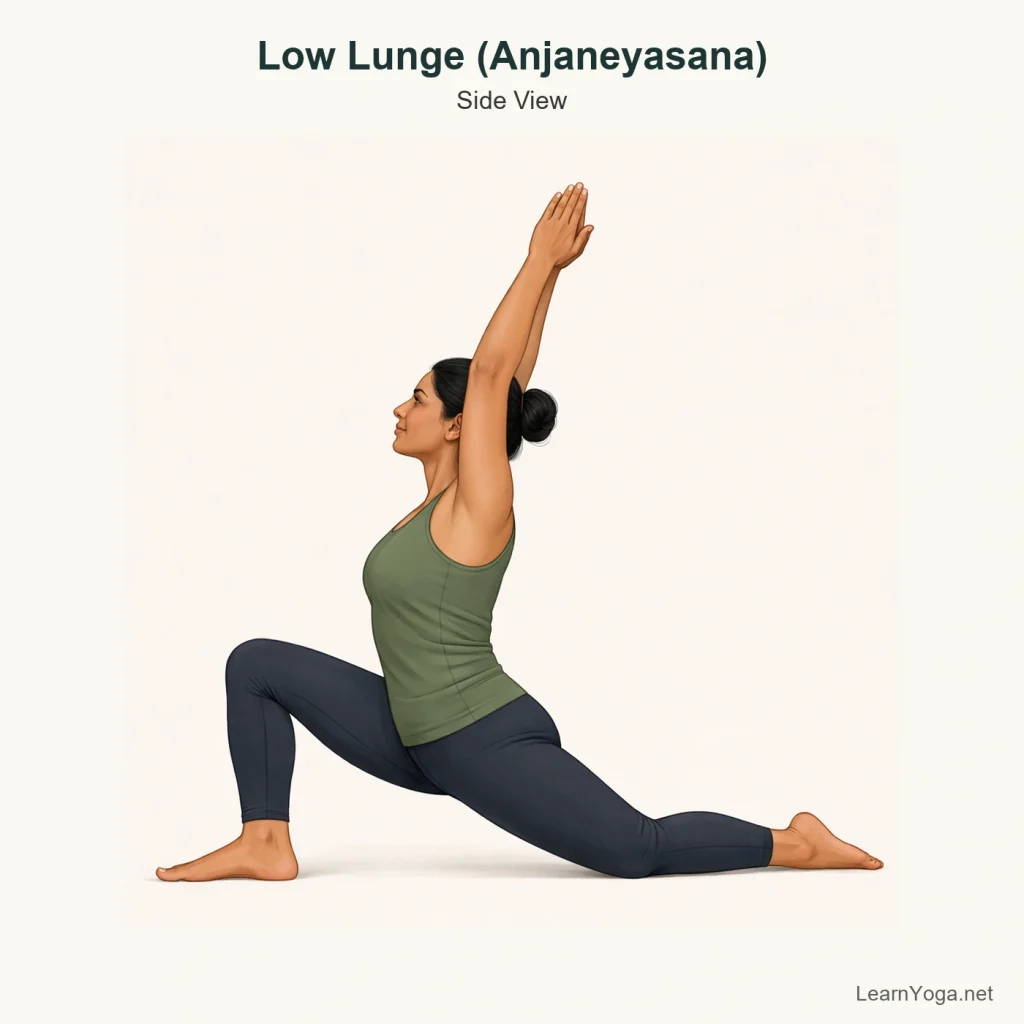
Low Lunge
Anjaneyasana
Low Lunge is a simple kneeling lunge that opens the front of the back hip while asking the front leg to steady the shape. It is often used to prepare for standing poses, lunges and backbends.

Pose Explorer
Search all published poses or narrow the library by level, goal, body area, pose type, position or energy.
Low Lunge is a simple kneeling lunge that opens the front of the back hip while asking the front leg to steady the shape. It is often used to prepare for standing poses, lunges and backbends.

Low Lunge Twist combines a lunge with a gentle rotation through the spine. It can help you organise the legs, steady the pelvis, and explore twisting without needing a very deep range.

Lotus Pose is a traditional seated posture with each foot placed high on the opposite thigh. It asks for a large amount of external rotation at the hips, and for many people the limiting area is the knees or ankles rather than the hips, so it needs patience and an honest range.

Lotus Forward Fold is a deep seated shape done from Lotus Pose, with the legs in a strong external rotation and the spine folding forward. It asks for a lot from the hips, knees and ankles, so it is usually best kept small and practised only if Lotus already feels steady and pain-free for your body.

Locust Pose is a prone backbend that strengthens the back body and teaches you to lift from length rather than from force. It can be practised very mildly, with just the chest or just the legs lifting, or as a fuller shape when that feels steady.

Lizard Pose is a deep low lunge variation that opens the front of the hip on the back leg while asking the front hip to fold more deeply. It can be practised upright on the hands or lowered to the forearms, depending on what feels steady and clear in your body.

Little Thunderbolt Pose is a deep kneeling backbend where the thighs stay roughly upright as the body arcs back. It asks for strong leg engagement, open front thighs and a backbend that spreads through the whole front body rather than dropping into the lower back.

Lion Pose is a simple seated posture often practised from kneeling. It combines an upright spine, a broad chest and a deliberate facial release, so it can be useful when you want a short, alert pause rather than a long hold.

Legs Up the Wall Pose is a quiet supported inversion done on the floor with the legs resting against a wall. It can be a simple way to pause, soften effort and give the back body a break after standing or sitting for a long time.

Knees-to-Chest Pose is a simple lying-down shape that gently bends the hips and spine. It is often used near the start or end of practice to settle the body, soften the back and bring attention to the breath.