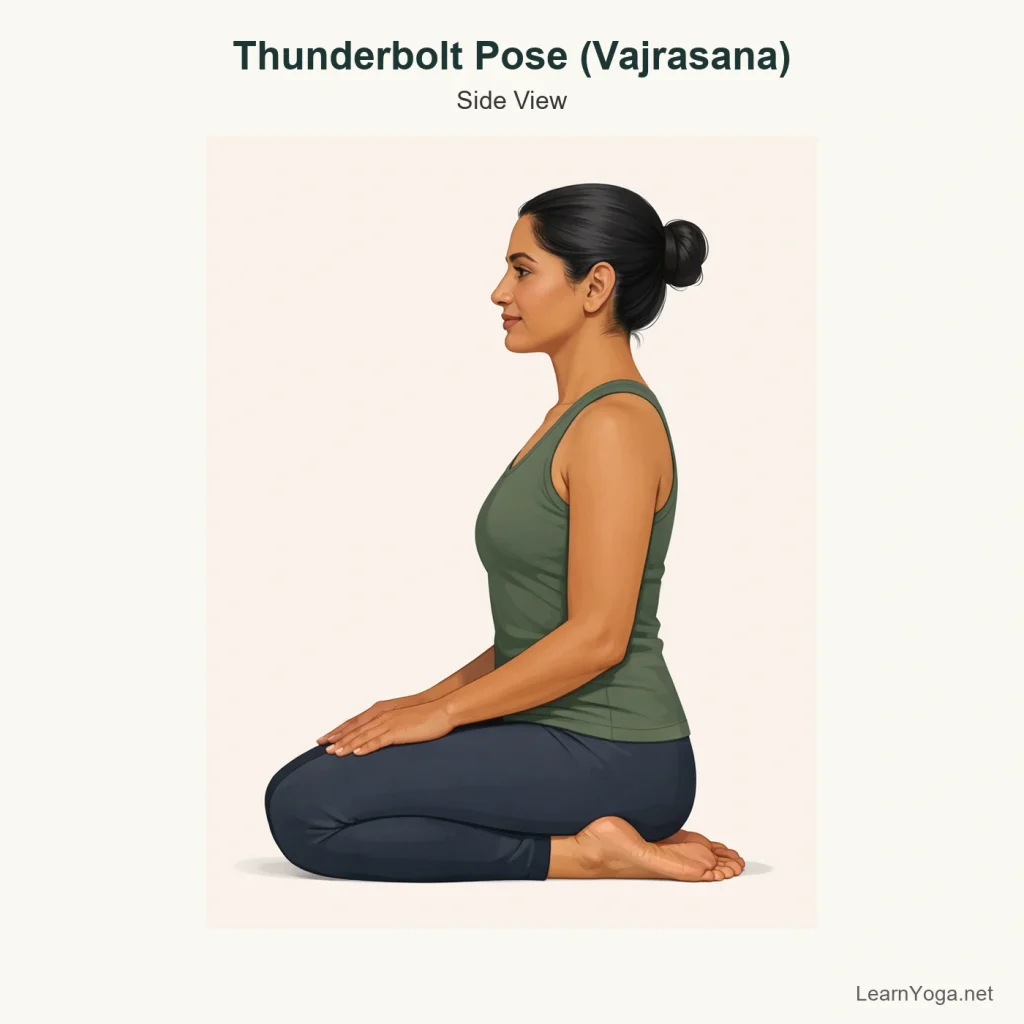
Lion Pose is a simple seated posture often practised from kneeling. It combines an upright spine, a broad chest and a deliberate facial release, so it can be useful when you want a short, alert pause rather than a long hold.
BeginnerkneelingseatedchestneckspineEnergising
Typical hold: 1 to 3 breaths, repeated 2 to 4 rounds
Timing: Hold the setup for 1 inhale and 1 long exhale. · Repeat 2 to 4 rounds with a steady pause between each one. · Stay for 3 slow breaths if you prefer a quieter version without the strong exhale.
Lion Pose is less about stretching deeply and more about changing tone. You sit upright, ground the hands, widen the face and let the exhale come out clearly. Some people enjoy the expressive version with the tongue out and the gaze lifted. Others prefer a smaller version. Both are fine. The useful part is the clear breath and the sense that the jaw, throat and chest are not bracing unnecessarily.
How to do Lion Pose
Come to a kneeling seat such as Thunderbolt Pose, or sit on a block, cushion or chair if that is more comfortable for your knees or ankles.
Place your hands on your thighs or knees with the fingers spread lightly. Sit tall through the spine and let the chest feel broad without hardening the lower ribs.
Take a steady inhale through the nose.
As you exhale, press the hands down gently, open the mouth wide, stretch the tongue forward and down, and let the breath leave with a soft 'ha' sound if you like.
You can direct the gaze toward the tip of the nose or slightly upward if that feels comfortable for your eyes and neck. Keep the back of the neck long rather than throwing the head back.
Soften the face after the exhale and return to a neutral seat.
Repeat for 2 to 4 rounds, breathing normally between rounds.
Yogita's tip
The pose usually feels clearer when the exhale starts from the breath, not from pulling a face first. Inhale to lengthen, then let the tongue and jaw respond to the exhale.
Benefits
Encourages a full, deliberate exhale.
Brings attention to the jaw, tongue and throat, which many people hold more tightly than they realise.
Practises sitting upright with a broad chest and steady base.
Can help shift a quiet seated practice from sleepy to attentive.
Common mistakes
Throwing the head back instead of keeping the neck long.
Forcing the mouth and tongue so hard that the face feels strained rather than released.
Collapsing the chest and rounding the back while focusing only on the expression.
Holding the breath before the exhale instead of letting it move smoothly.
Make it work for you
Sit on a block or folded blanket
Place support under the sitting bones or between the heels and pelvis to reduce pressure in the knees and ankles and make it easier to sit upright.
Hands on thighs instead of knees
Keep the hands closer to the hips if reaching to the knees makes the shoulders tighten or the chest collapse.
Small-face version
Open the mouth only part way and soften the tongue forward gently if the full expression feels too intense or awkward.
Alternatives
Chair-seated Lion Pose
Sit toward the front of a chair with both feet on the floor. Place your hands on your thighs, sit tall and practise the same inhale through the nose and open-mouth exhale.
Use this if kneeling is uncomfortable or getting to the floor is not practical.
Easy Pose with Lion Breath
Sit cross-legged on a cushion, lengthen the spine and practise the same strong but controlled exhale without forcing the face.
Use this if your ankles do not tolerate kneeling well.
Common variations
Classic Lion Pose
Practised from a kneeling seat with the hands pressing lightly onto the knees and the tongue stretching forward on the exhale.
Quiet Lion Breath
The same upright seat and broad chest, but with a smaller mouth opening and a softer exhale for a less dramatic version.
Safety and contraindications
When to avoid or get individual guidance
Recent jaw, tongue or throat irritation may call for a gentler version.
If kneeling is painful for your knees or ankles, avoid the floor setup and use a chair instead.
Keep the neck easy. The gaze can lift slightly, but there is no need to drop the head back.
If kneeling bothers your knees or ankles, choose a chair or supported seated version.
Make the exhale clear but not forceful enough to leave you light-headed.
Pause Lion Pose and switch to a chair or more supported seat when sharp pain shows up in the jaw, throat, knees, or ankles, or the strong exhale leaves you dizzy. Get individual guidance before repeating it.
Accessibility and limited mobility
A chair version works well for older adults or anyone who finds kneeling or getting up from the floor tiring.
If sitting back on the heels is limited, place a block or folded blanket under the pelvis.
If looking upward feels uncomfortable, keep the gaze forward or slightly down and focus on the breath instead.
Easier options
Use these related poses when you want a more accessible way to practise a similar movement or prepare for this pose.
No. A soft 'ha' on the exhale is common, but it is optional. The main point is a clear, steady exhale with the face and jaw releasing, not the volume of the sound.
Should my tongue stretch straight out or down?
Many people find it more comfortable to reach the tongue forward and slightly down. If it strains, ease back. You are looking for a definite action, not a hard pull.
What if kneeling hurts my knees or ankles?
Use a block, folded blanket or cushion under your seat, or take the pose on a chair. The breathing action and upright spine matter more than staying on the floor.
Where should I look in this pose?
You can look toward the tip of the nose, straight ahead, or slightly upward. Choose the option that lets your eyes stay soft and your neck stay long. There is no need to force the gaze.
Reviewed for yoga instruction
Yogita
Certified Yoga Instructor with 5+ years of Teaching and Consistent Practice