Locust Pose is a prone backbend that strengthens the back body and teaches you to lift from length rather than from force. It can be practised very mildly, with just the chest or just the legs lifting, or as a fuller shape when that feels steady.
Locust Pose is often more useful when you treat it as a long reach through the legs and chest, not as a race to lift high. The floor gives clear feedback here. If the lower back feels crowded, the shape has usually become too big. A smaller lift with more length is often the better version.
How to do Locust Pose
Lie on your belly with your legs hip-width or a little wider if that is more comfortable. Let the tops of the feet press into the mat and rest your arms alongside you with the palms facing down or in.
Bring your forehead or chin lightly to the mat, depending on what feels easier on your neck. Draw the lower belly gently in so the front ribs do not spill forward.
On an inhale, lengthen your legs back and reach through your toes. At the same time, lift your chest slightly away from the floor and move the collarbones broad.
If it feels steady, lift the arms and legs a little as well. Keep the back of the neck long and look slightly down, not forward.
Press the tops of the feet back and let the inner thighs stay awake. The buttocks can work, but avoid clenching them as hard as possible.
Stay for 3 to 5 calm breaths, or for one inhale hold if you prefer shorter rounds. Lower down on an exhale and rest with one cheek on the mat before repeating.
Yogita's tip
If the legs lift but the lower back feels pinched, make the toes reach back more firmly than up. That usually spreads the effort through the whole back body instead of dumping it into one spot.
Benefits
Strengthens the muscles along the back of the body, including the upper back, glutes and backs of the legs.
Builds awareness of spinal extension without needing the arms to bear weight.
Can help you practise opening across the chest while keeping the neck long.
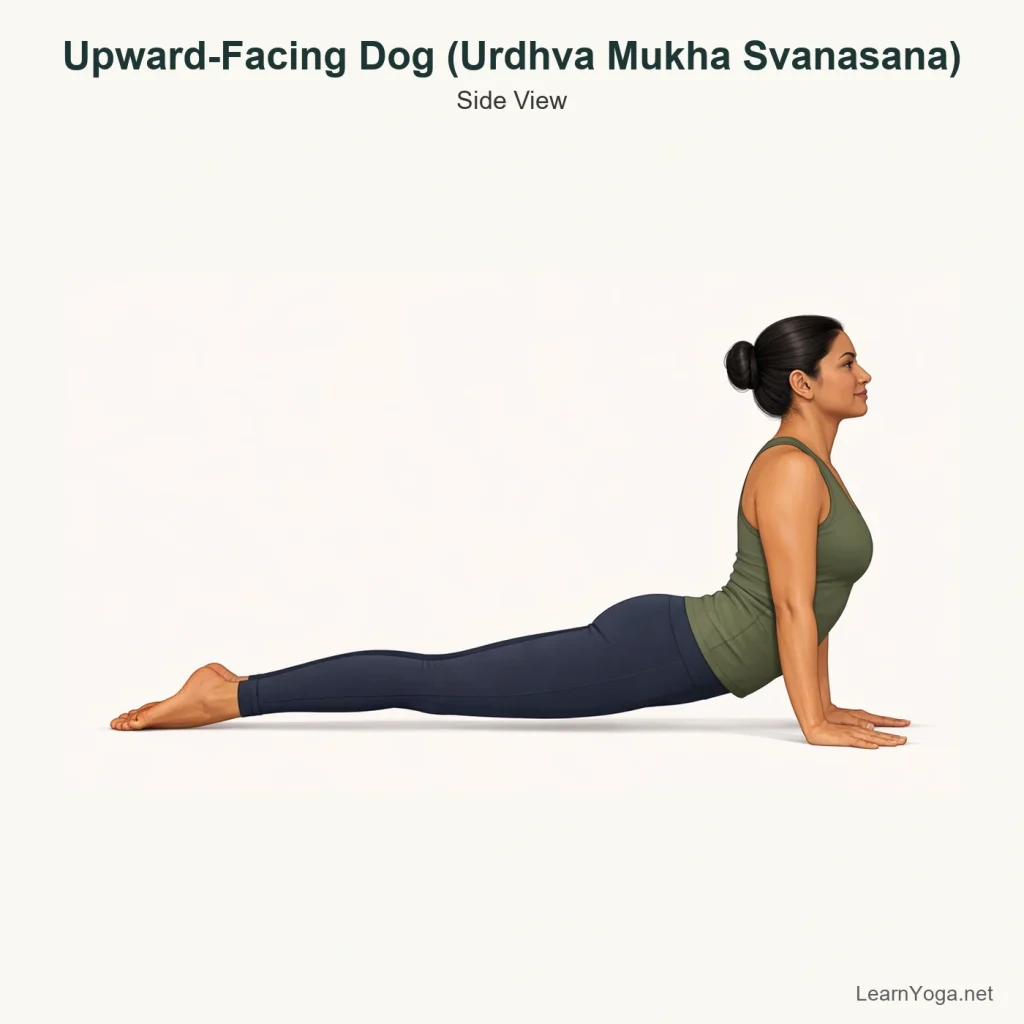
Offers a useful preparation for stronger backbends such as Bow Pose or Upward-Facing Dog.
Common mistakes
Lifting too high and shortening the lower back instead of creating length first.
Throwing the head back, which can compress the neck.
Squeezing the buttocks as hard as possible and losing steadiness in the breath.
Letting the legs roll out wide so the lift comes mostly from the outer hips.
Holding the pose so long that the breath becomes strained.
Make it work for you
Baby Locust
Keep the legs on the floor and lift only the chest and arms a little on an inhale. This reduces the load on the lower back and makes the shape easier to organise.
Legs-Only Locust
Rest your forehead on folded hands and lift one or both legs lightly while keeping the chest down. This helps you feel the back-body work without managing the full pose.
Blanket Under Ribs
Place a folded blanket under the lower ribs or front hip bones if the floor feels too hard. A small amount of padding can make it easier to stay relaxed through the front body.
Alternatives
Sphinx Pose
Come onto your forearms with the elbows under the shoulders and lift the chest gently.
Use this if lifting the arms and legs together feels too strong or unclear.
Baby Cobra
Keep the pelvis grounded, press lightly into the hands and lift the chest just a little.
Choose this if you want a smaller backbend with support from the hands.
Bird Dog Pose
From hands and knees, reach one arm and the opposite leg long, keeping the trunk steady.
Try this if lying on the belly is uncomfortable or if you want back-body work with less spinal extension.
Common variations
Half Locust
Lift the chest with the legs staying down, or lift one leg at a time with the forehead supported.
Arms Interlaced Locust
Interlace the hands behind the back and lift the chest while drawing the shoulders away from the ears.
Full Locust
Lift the chest, arms and both legs at once while keeping the gaze slightly down and the breath steady.
Safety and contraindications
When to avoid or get individual guidance
Recent or irritated low back strain
Pregnancy, especially later stages, when lying on the belly is not comfortable
Abdominal discomfort that is aggravated by pressure on the front body
Keep the lift modest if your lower back feels compressed. More height is not the goal.
If lying on the belly is uncomfortable, choose Sphinx Pose or Bird Dog instead.
Keep the gaze slightly down so the neck stays in line with the rest of the spine.
Come out of Locust Pose if a sharp catch shows up in the low back or neck, or if discomfort does not ease once you lower down. Stick with a smaller lift or choose Sphinx, and get individual guidance before repeating stronger prone backbends.
Accessibility and limited mobility
If getting down to the floor is difficult, Bird Dog Pose can train a similar back-body pattern from hands and knees.
A folded blanket under the front ribs or pelvis can make the pose more tolerable for older adults or anyone who dislikes firm pressure on the belly or hip bones.
A smaller version is still a complete practice. Lifting only the chest, or only one leg at a time, often works better than forcing the full shape.
Easier options
Use these related poses when you want a more accessible way to practise a similar movement or prepare for this pose.
Not necessarily. Some people prefer the legs together, but hip-width apart is often easier on the lower back and gives more room to lengthen through the legs. Choose the width that lets you lift without gripping.
Where should I feel this pose most?
Most people feel Locust Pose in the back body: upper back, along the spine, buttocks and backs of the legs. You may also notice the chest broadening. Sharp pressure in the lower back is a sign to make the lift smaller.
Is it better to hold one long round or several short rounds?
For many learners, two or three shorter rounds work better. A brief, clear lift on an inhale can feel stronger and more organised than staying up until the breath becomes strained.
What if I cannot lift my legs very high?
That is completely fine. Height is not the point here. Reaching the legs back and keeping them active is already part of the pose. Even a very small lift can be effective if the shape feels long and steady.
Reviewed for yoga instruction
Yogita
Certified Yoga Instructor with 5+ years of Teaching and Consistent Practice