
Supported Fish Pose
Matsyasana Variation
Supported Fish Pose is a quiet reclining backbend done over a block, bolster or folded blanket to open the front of the chest without much effort from the arms or legs.

Explore by goal
Break up long periods of sitting with yoga poses that bring movement back to areas that can feel stiff after desk work. Explore options for the shoulders, spine, hips and legs, and choose movements that feel comfortable for your body.
The poses below share this goal classification, but a useful practice still needs an appropriate order, level and pace. Use the pose guides for modifications and safety notes, or let the Practice Builder arrange a complete sequence.
Supported Fish Pose is a quiet reclining backbend done over a block, bolster or folded blanket to open the front of the chest without much effort from the arms or legs.
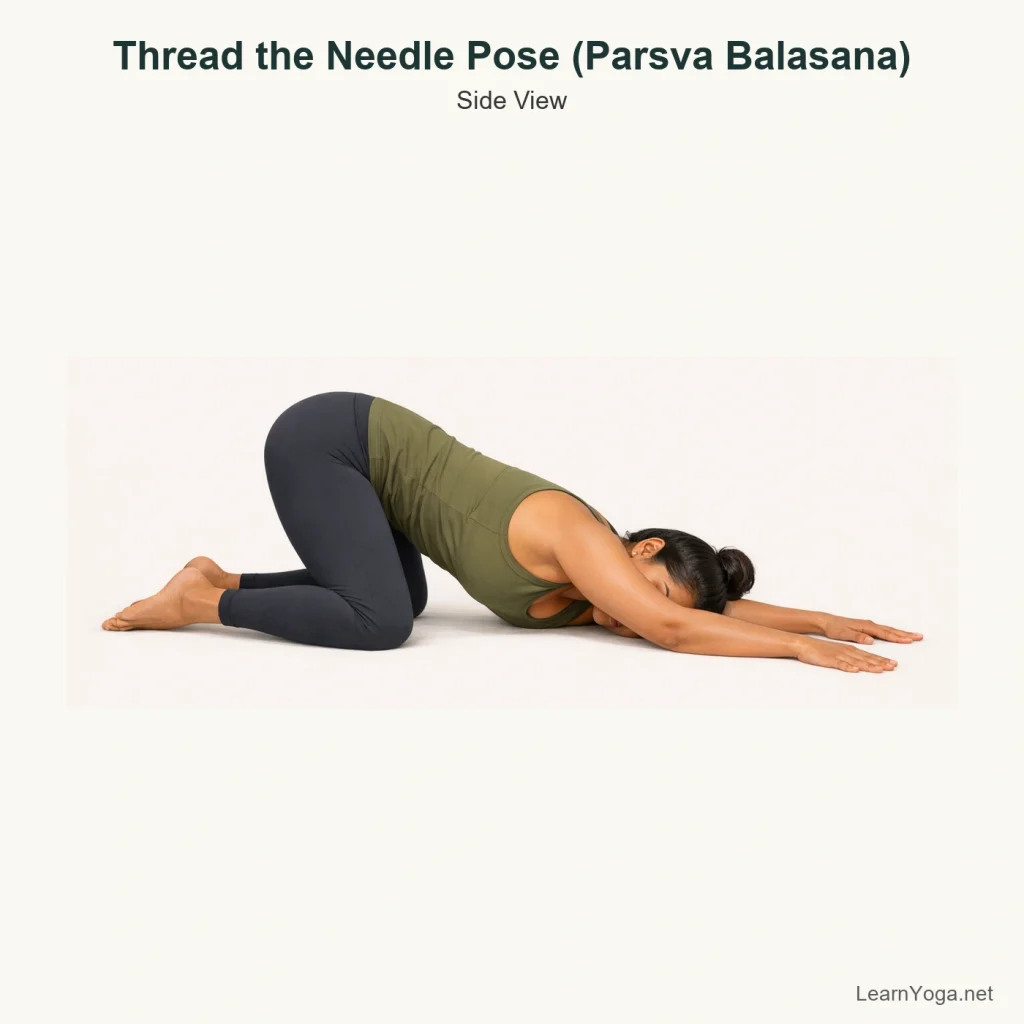
Thread the Needle is a gentle kneeling twist for the upper back and shoulders. It gives you a clear way to rotate through the thoracic spine without needing a large range, and you can keep it quite small if that feels better in your body.

Standing Side Stretch is a simple upright side bend that helps you create length through the sides of the body while keeping the feet grounded and the breath easy.

Supine Spinal Twist is a floor-based twist that gently rotates the spine and shifts the work out of the feet and hands. It is often used near the end of practice to unwind the back, soften the waist and ribs, and let the breath settle.

Reverse Tabletop is a simple back-body strength pose that opens the front of the shoulders and chest while asking the hips to lift. It can be useful after sitting, though the comfortable range will vary from body to body.

Reclining Eagle-Leg Twist combines a wrapped-leg shape with a supine twist, creating a clear stretch through the outer hip and side waist while keeping the body supported by the floor.

One-Knee Supine Twist is a simple reclining twist that brings gentle rotation to the spine while keeping one foot on the floor. It is often more manageable than a full supine twist and works well at the end of practice or after long periods of sitting.

Legs Up the Wall Pose is a quiet supported inversion done on the floor with the legs resting against a wall. It can be a simple way to pause, soften effort and give the back body a break after standing or sitting for a long time.

Lion Pose is a simple seated posture often practised from kneeling. It combines an upright spine, a broad chest and a deliberate facial release, so it can be useful when you want a short, alert pause rather than a long hold.

Half Gate Pose is a simple kneeling side stretch with one leg extended out to the side. It gives you a clear way to explore the inner leg, side waist and ribcage without needing a deep range.
Learn how pose order changes a complete session in How Yoga Sequencing Works. If you are learning a particular pose, use the Pose Progression Explorer to find preparation and possible next steps.