Explore by goal

Yoga Poses for Relaxation

Slow the pace of your practice with calming yoga poses designed for rest, gentle release and quieter breathing. Many of these poses work well at the end of a practice, before bed or whenever you want a less demanding approach.

Build a practice around this goal

The poses below share this goal classification, but a useful practice still needs an appropriate order, level and pace. Use the pose guides for modifications and safety notes, or let the Practice Builder arrange a complete sequence.

Build a practice Browse routines

Person lying on the back with calves resting on a chair in Waterfall Pose side view.

Waterfall Pose

Viparita Karani Variation

Waterfall Pose is a simple legs-up variation done on the floor, often with the calves resting on a chair or sofa seat. It gives the legs a break, keeps the neck neutral and is usually easier to settle into than a wall-based inversion.

Wide-Knee Child's Pose with knees apart, big toes together, torso resting forward and forehead supported on the floor.

Wide-Knee Child’s Pose

Balasana Variation

Wide-Knee Child's Pose is a quiet kneeling forward fold with the knees apart and the big toes usually drawing toward each other. It gives the belly and chest more room than the narrower version, so many people find it easier to breathe into the back ribs and soften the hips.

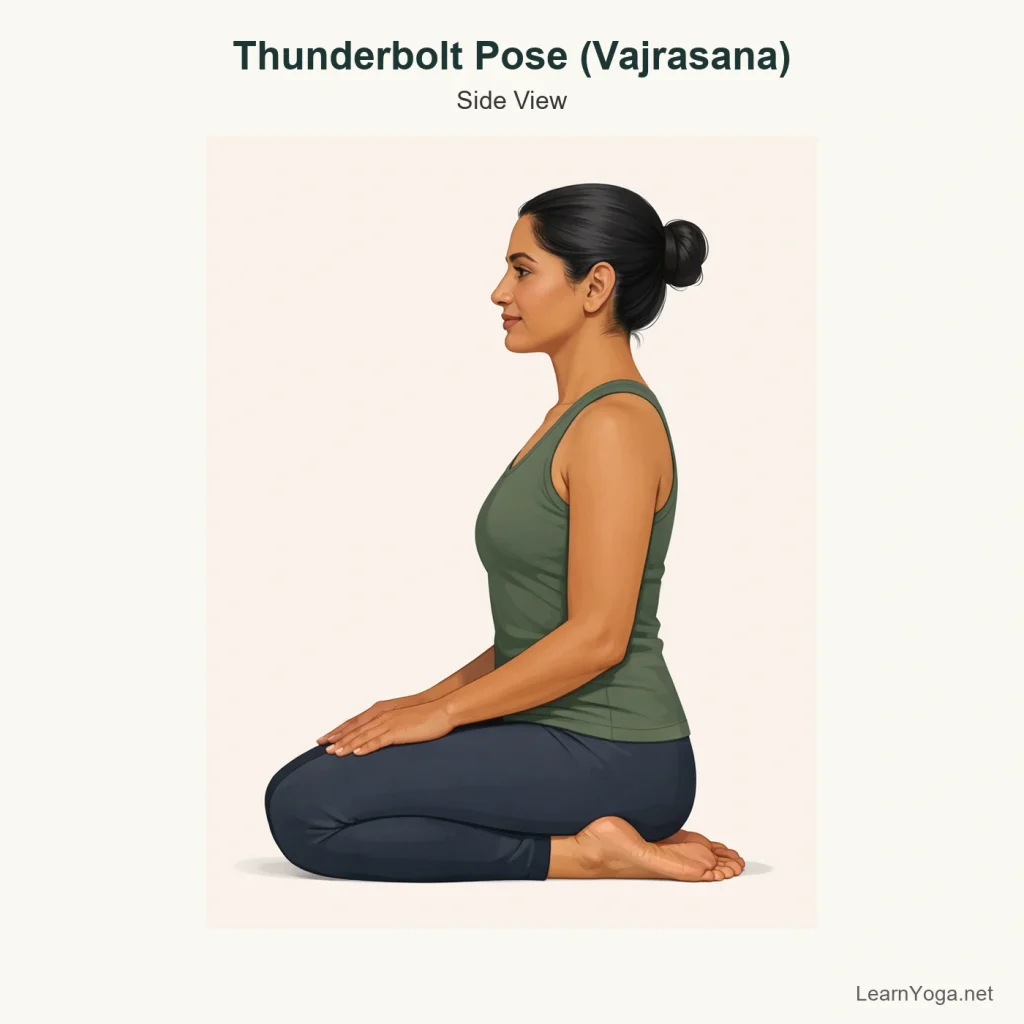
Person sitting upright in Thunderbolt Pose with shins on the floor and hands resting on thighs, shown from the side.

Thunderbolt Pose

Vajrasana

Thunderbolt Pose is a simple kneeling seat with the shins on the floor and the pelvis resting on the heels or on support. It can be a steady place for breathing, pausing between poses or sitting upright without crossing the legs.

Supported Child's Pose with the torso resting on a bolster from a side view.

Supported Child’s Pose

Salamba Balasana

Supported Child's Pose is a quiet kneeling forward fold with the torso resting on props. It can make the shape more spacious for the back, hips and shoulders than an unsupported version, especially when folding deeply or reaching the floor is not comfortable.

Person reclining in Supported Fish Pose over a prop with chest gently lifted and head supported.

Supported Fish Pose

Matsyasana Variation

Supported Fish Pose is a quiet reclining backbend done over a block, bolster or folded blanket to open the front of the chest without much effort from the arms or legs.

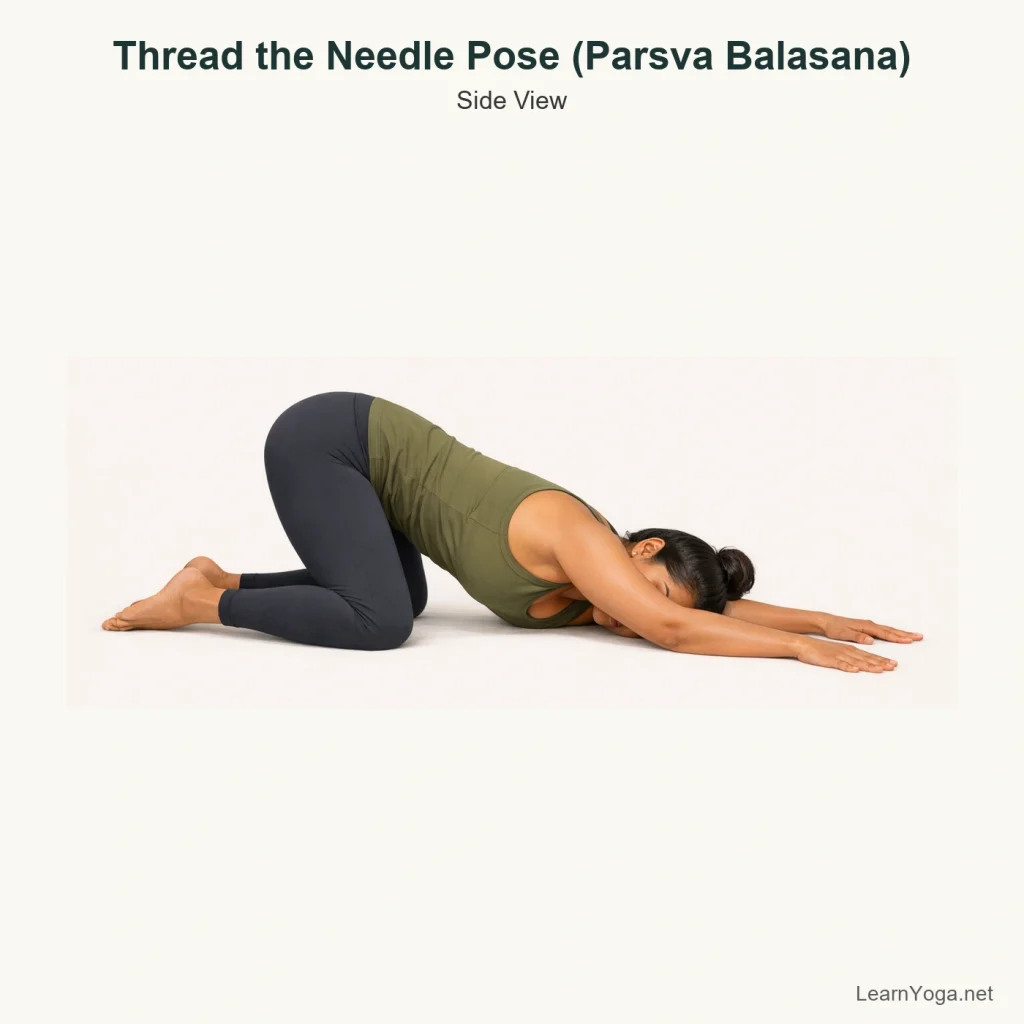
Side view of Thread the Needle Pose with one arm slid under the chest and shoulder resting on the floor.

Thread the Needle Pose

Parsva Balasana

Thread the Needle is a gentle kneeling twist for the upper back and shoulders. It gives you a clear way to rotate through the thoracic spine without needing a large range, and you can keep it quite small if that feels better in your body.

Person lying on the back in Supine Spinal Twist with bent knees resting to one side and arms open.

Supine Spinal Twist

Supta Matsyendrasana

Supine Spinal Twist is a floor-based twist that gently rotates the spine and shifts the work out of the feet and hands. It is often used near the end of practice to unwind the back, soften the waist and ribs, and let the breath settle.

Side view of Supported Bridge Pose with the pelvis resting on a yoga block under the sacrum.

Supported Bridge Pose

Salamba Setu Bandha Sarvangasana

Supported Bridge is a quiet backbend done lying on the back with a block or firm support under the sacrum. It gives you the lifted shape of Bridge without asking the legs and back to keep working hard the whole time.

Side view of Sleeping Pigeon Pose with the front leg bent under the body and the torso folded forward.

Sleeping Pigeon Pose

Kapotasana Preparation

Sleeping Pigeon is a folded version of Pigeon that brings more weight into the front hip and outer glute. It can feel quite strong, so it helps to set the legs carefully and let the fold be modest rather than chasing the floor.

Person practising Sphinx Pose on the belly with forearms on the floor and chest gently lifted.

Sphinx Pose

Salamba Bhujangasana

Sphinx Pose is a low supported backbend done on the belly with the forearms on the floor. It gives you a clear way to open the front of the chest and wake up the upper back without asking for a big lift.

Continue learning

Learn how pose order changes a complete session in How Yoga Sequencing Works. If you are learning a particular pose, use the Pose Progression Explorer to find preparation and possible next steps.