Rabbit Pose is a kneeling forward fold with a rounded spine. It can create a clear stretch across the upper back while inviting the head and neck to stay quiet rather than strained.
Rabbit Pose is usually entered from a kneeling seat. The shape looks simple, but it works better when you do not chase the biggest curl possible. Think of lifting the hips slightly and drawing the front ribs in so the rounding spreads through the whole spine. Your head can be light, and your comfortable range may be quite small.
How to do Rabbit Pose
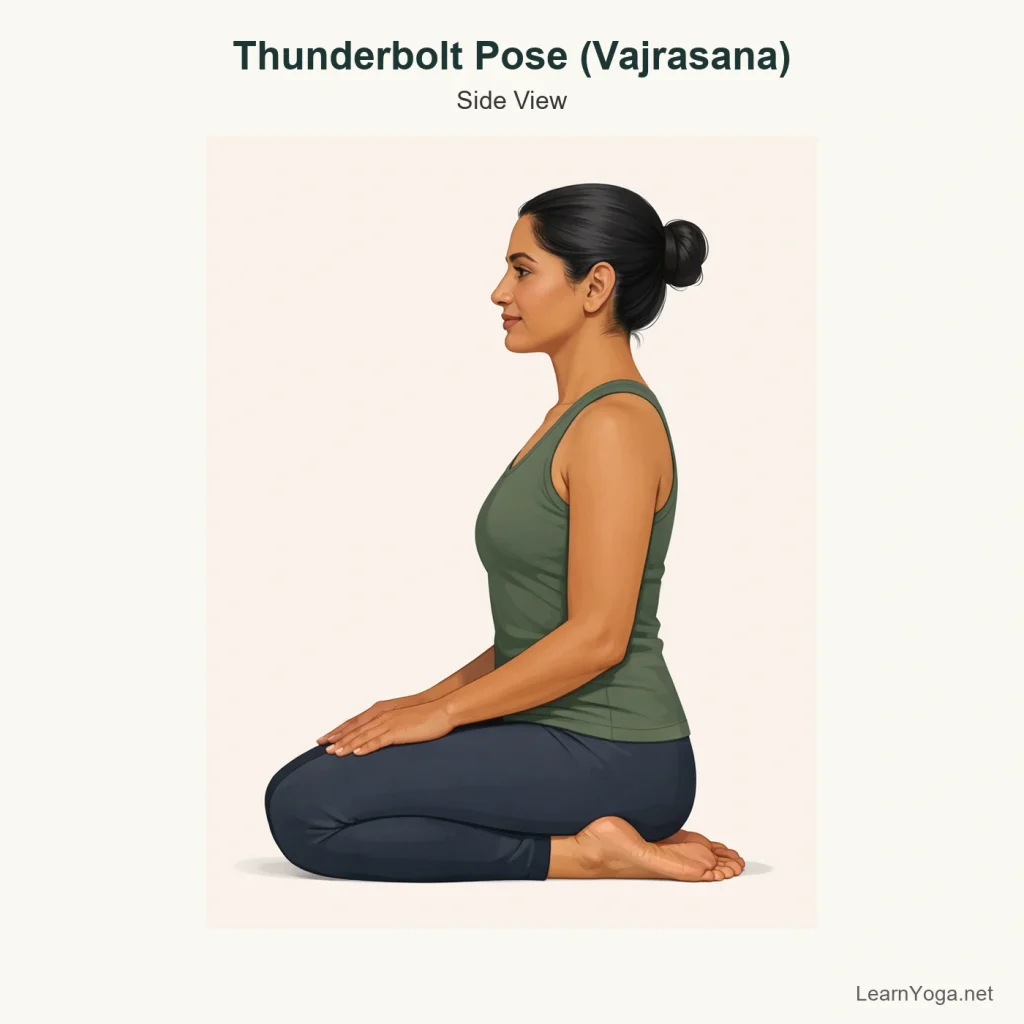
Start in Thunderbolt Pose with your shins and the tops of your feet on the floor.
Lean forward and place the crown of your head lightly on the mat a comfortable distance in front of your knees.
Reach back and hold your heels or ankles. If that is not available, keep your hands on the floor beside your legs instead.
On an inhale, let the hips lift slightly away from the heels.
On an exhale, gently draw the chin a little toward the chest and round through the upper back, as if you are doming the space between your shoulder blades.
Keep most of the effort in the lift of the hips and the rounding of the spine rather than pressing weight into the head.
Stay for 3 to 6 slow breaths. Keep the jaw soft and the breath even.
To come out, lower the hips toward the heels, release your hands, and roll up slowly or rest in Child's Pose for a breath.
Yogita's tip
If the shape just feels like pressure on the top of the head, lift the hips a touch more and pull very gently on the heels. That usually shifts the work into the upper-back rounding, which is the clearer action here.
Benefits
Stretches across the upper back and the back of the shoulders.
Practises spinal flexion in a supported kneeling position.
Can help you notice how to round the spine without collapsing all the weight into the neck.
Encourages a quieter, slower breath when held lightly.
Common mistakes
Dumping too much weight onto the head instead of keeping the neck light.
Trying to pull into the deepest possible curl and losing steady breathing.
Letting the elbows flare wide and the shoulders tense toward the ears.
Forcing the hips to stay on the heels, which can reduce the upper-back stretch.
Make it work for you
Hands on floor version
Keep your hands on the mat beside your lower legs instead of holding the heels. This makes the pose less intense for the shoulders and neck.
Blanket under shins or head
Place a folded blanket under the shins for knee comfort, or under the head if the floor feels too firm.
Alternatives
Child's Pose
Fold back into Child's Pose with your arms forward or alongside your body.
Use this if kneeling is comfortable but placing the head and neck in Rabbit Pose feels too strong.
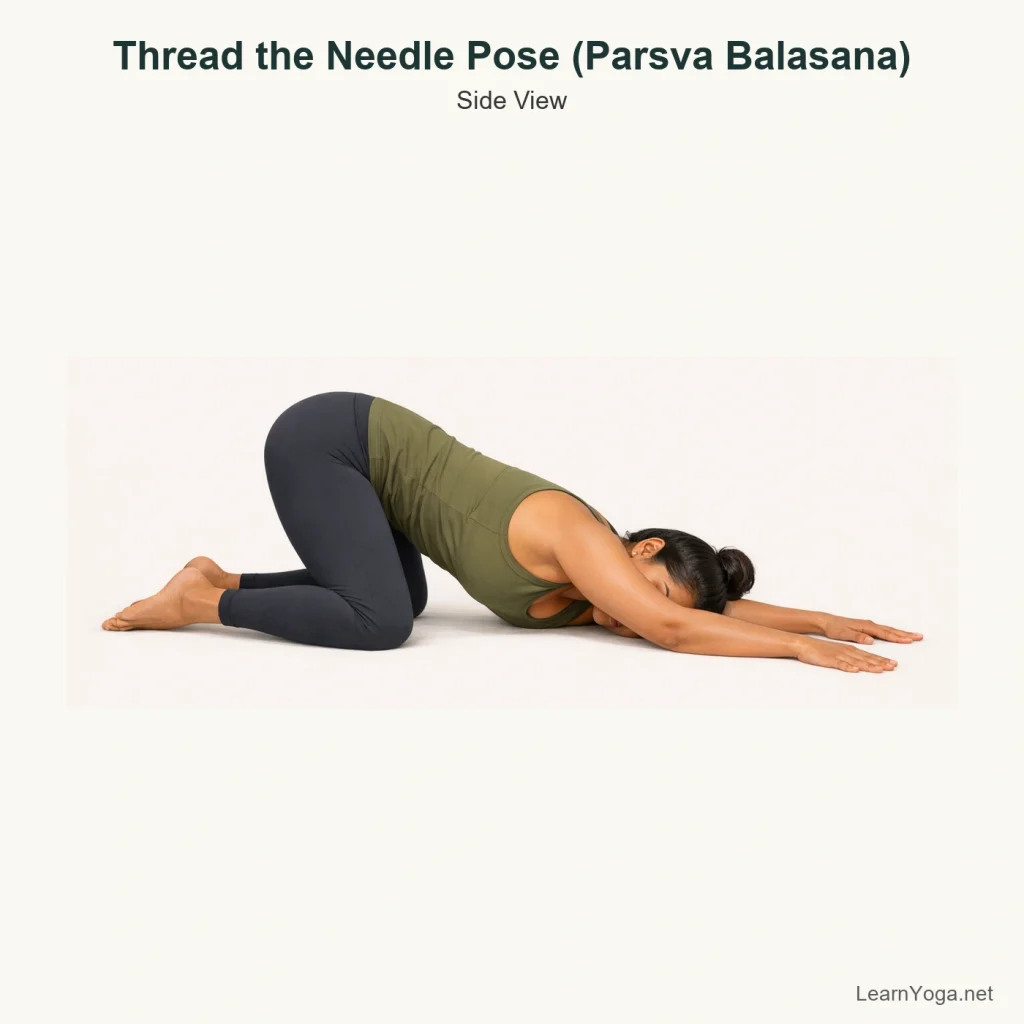
Thread the Needle Pose
From hands and knees, slide one arm underneath the other and rest on the shoulder and side of the head.
Use this if you want a gentler upper-back and shoulder stretch without the same amount of neck flexion.
Supported Child's Pose
Rest your torso on a bolster or stacked blankets with your knees bent comfortably.
Use this if getting into a compact kneeling fold is tiring or if you want a quieter resting option.
Common variations
Classic heel-hold Rabbit Pose
The traditional version with the hands holding the heels or ankles while the hips lift slightly and the spine rounds.
Supported Rabbit Pose
A softer version with padding under the head or knees and less lift through the hips.
Safety and contraindications
When to avoid or get individual guidance
Avoid or reduce the pose if kneeling bothers your knees.
Skip it if neck flexion or pressure on the crown of the head is not comfortable for you.
Keep the weight light on the head and neck.
If your knees are sensitive in kneeling, add padding or choose Child's Pose.
Come out slowly if you feel dizzy after having the head lowered.
Stop Rabbit Pose if you get sharp neck pain, a headache, or dizziness that does not settle once you lift your head and rest. Choose a gentler option such as Child's Pose, and get individual guidance before trying it again.
Accessibility and limited mobility
If kneeling is uncomfortable, place a folded blanket under the shins or behind the knees, or choose Supported Child's Pose instead.
For older adults or anyone who feels unsteady coming into a head-down kneeling shape, set up near a wall for orientation and move slowly in and out.
If getting down to the floor is the main barrier, a seated forward rounding action in a chair may be more practical, even though it is not the same pose.
Easier options
Use these related poses when you want a more accessible way to practise a similar movement or prepare for this pose.
How much weight should be on my head in Rabbit Pose?
Only a light amount. The clearer action is the rounding of the spine and the slight lift of the hips, not pressing down through the head. If your neck feels compressed, back out and make the pose smaller.
What if I cannot reach my heels?
You can keep your hands on the floor beside your legs and still practise the rounded shape. That version is often more comfortable for the shoulders and gives you room to learn the action without pulling.
Should my hips stay on my heels?
Not necessarily. In this pose the hips usually lift a little. That small lift helps the spine round more evenly and often reduces the sense of collapsing into the neck.
Why does this feel stronger in my knees than my back?
The kneeling setup may be the limiting factor for your body. Add padding under the shins or behind the knees, or choose Child's Pose or Supported Child's Pose instead. The best version is the one you can breathe in comfortably.
Reviewed for yoga instruction
Yogita
Certified Yoga Instructor with 5+ years of Teaching and Consistent Practice